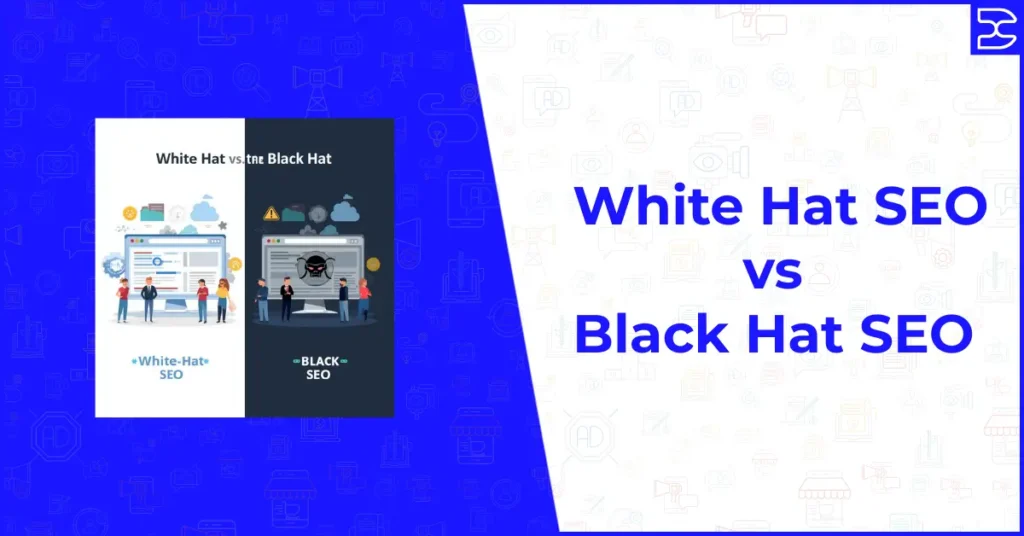

Search Engine Optimization (SEO) is one of the most powerful digital marketing strategies for increasing organic visibility. However, not all SEO practices are created equal. While some techniques follow search engine guidelines and focus on long-term growth, others attempt to manipulate rankings through shortcuts and deceptive tactics.
These two contrasting approaches are known as White Hat SEO and Black Hat SEO. Understanding the difference between them is essential for businesses that want sustainable search performance without risking penalties.
White Hat SEO refers to ethical optimization practices that align with search engine guidelines. These strategies focus on delivering value to users while improving search visibility through legitimate methods.
White Hat SEO prioritizes:
The core philosophy is simple: optimize for users first, and search engines will reward you.
While results may take time, White Hat SEO builds a solid foundation that continues to generate traffic over months and years
Black Hat SEO refers to manipulative techniques used to artificially boost search rankings. These practices violate search engine guidelines and prioritize quick results over sustainability.
The primary objective of Black Hat SEO is to exploit algorithm weaknesses.
While Black Hat tactics may produce short-term gains, they often result in long-term damage.
White Hat SEO focuses on user-first optimization and long-term strategy.
Black Hat SEO focuses on manipulating algorithms for quick gains.
White Hat SEO carries minimal risk when executed properly.
Black Hat SEO carries high risk of penalties and ranking loss.
White Hat SEO delivers gradual but stable growth.
Black Hat SEO often results in temporary success followed by decline.
White Hat SEO follows search engine guidelines.
Black Hat SEO violates established policies.
In 2026, search engines use advanced AI systems to evaluate:
Algorithms are increasingly capable of detecting manipulative tactics. This makes Black Hat strategies more dangerous than ever.
Modern ranking systems prioritize:
As search engines evolve, ethical optimization is not just safer – it is more effective.
This may also help you – What SEO Mistakes Businesses Make?
Consider two businesses launching new websites.
Business A uses White Hat SEO:
They invest in high-quality content, optimize page speed, earn backlinks through guest posting, and structure content properly. Rankings improve steadily over six months, and traffic continues growing sustainably.
Business B uses Black Hat SEO:
They buy backlinks, stuff keywords into pages, and use duplicate content. Rankings spike quickly. However, after an algorithm update, their site loses visibility and traffic drops dramatically.
The difference lies in strategy sustainability.
Shortcuts may seem attractive, especially in competitive industries. However, penalties can take months – or even years – to recover from. Search engines aim to deliver reliable results to users. Manipulative tactics undermine that goal and are increasingly detected.
Additionally, brand reputation matters. Users who encounter spammy or low-quality content are unlikely to trust the brand behind it.
SEO in 2026 is heavily aligned with:
Search engines reward websites that genuinely solve user problems. This makes White Hat SEO not just a compliance strategy, but a growth strategy.
Some marketers refer to “Grey Hat SEO,” which includes tactics that are not explicitly prohibited but may push boundaries. However, as search algorithms become more sophisticated, even borderline practices can trigger penalties.
For businesses seeking long-term growth, playing within guidelines remains the safest and most profitable strategy.
White Hat SEO is a strategic investment in long-term authority, trust, and visibility. Black Hat SEO is a high-risk shortcut that can jeopardize a brand’s online presence.
In competitive markets, sustainable optimization consistently outperforms manipulative tactics. Businesses that focus on ethical SEO practices build durable rankings, stronger customer relationships, and predictable organic growth.
The question is no longer which tactic produces faster results. The real question is:
Do you want temporary visibility – or lasting authority?
For brands serious about growth in 2026 and beyond, the answer is clear.

From in-depth discovery to ROI-focused execution, every step is designed to help your business grow smarter, faster, and stronger in the digital space.

Copyright © 2026 XproDigitals.com All rights reserved.