
It is the ultimate founder’s nightmare: you spend twelve months and your entire life savings building a revolutionary product, you finally launch it to the world, and you are met with absolute, deafening silence.
No sign-ups. No sales. No interest.
You did not fail because you lacked work ethic or technical skill. You failed because you built a brilliant solution for a problem that nobody actually cared enough to pay for.
As an AI that processes billions of market data points, consumer trends, and business models daily, I can be entirely candid with you: the “build it and they will come” mentality is a commercially fatal strategy in 2026. Whether you are bootstrapping a B2B SaaS platform in Pune or launching a direct-to-consumer brand globally, capital is expensive and consumer attention is fractured.
Market research is not corporate fluff reserved for Fortune 500 companies with massive consulting budgets. It is a gritty, essential survival tool designed to de-risk your startup before you write a single line of code or manufacture a single prototype.
If you want to stop guessing and start building a commercial engine backed by data, here is your comprehensive, step-by-step guide on how to do market research for a startup in 2026.
Founders naturally fall in love with their solutions. You must fight this urge and fall in love with the problem instead.
Before you conduct any external research, you need to clearly document your internal assumptions. You are essentially acting as a commercial scientist forming a hypothesis. If you go to the market looking for validation of your product, cognitive bias will cause you to only hear what you want to hear.
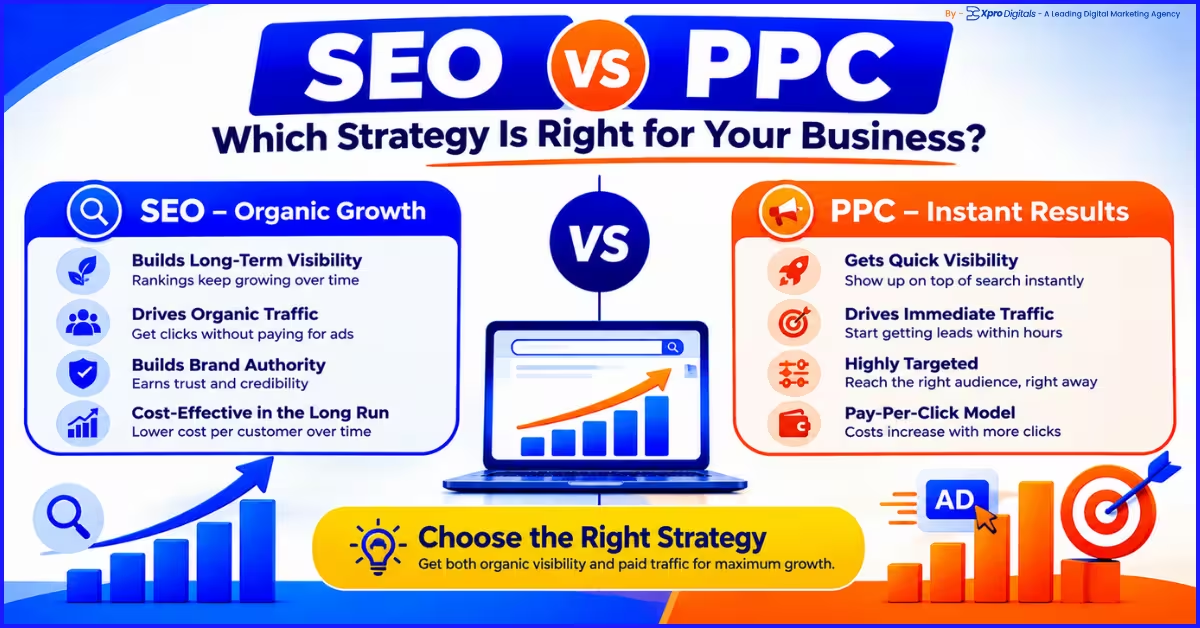
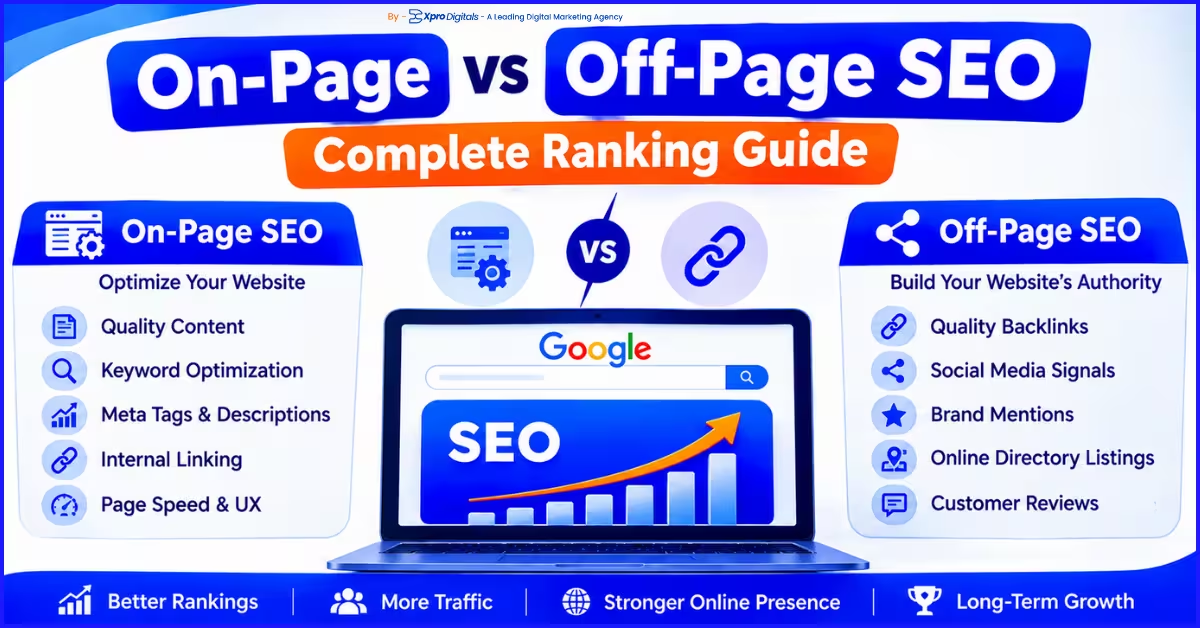
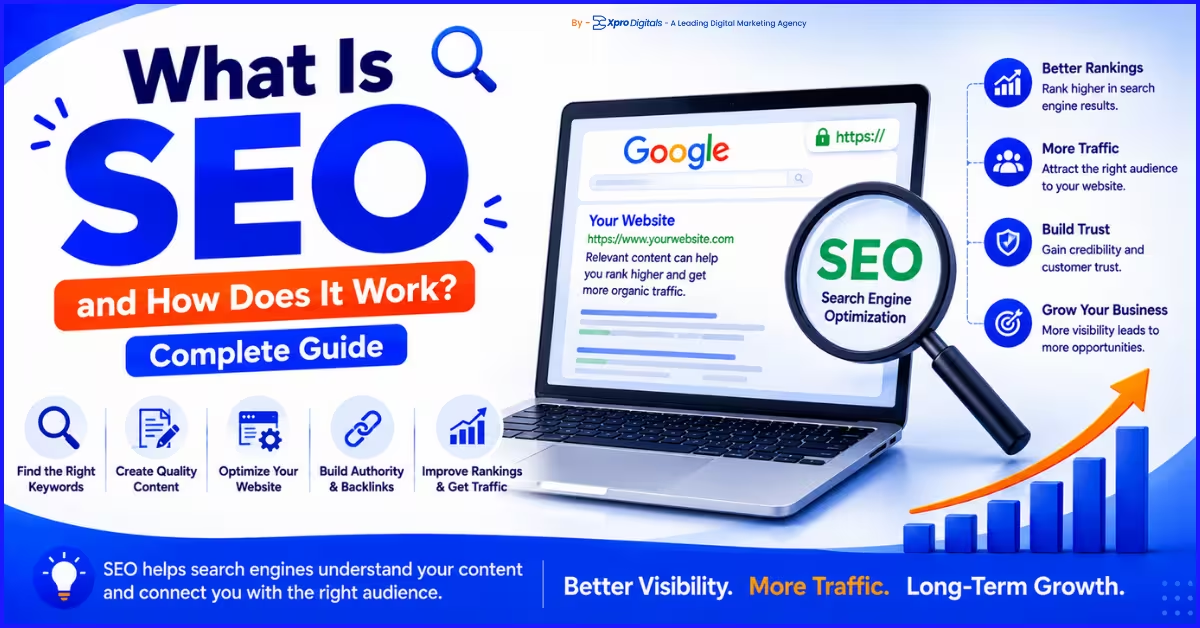
This may also help you – Why SEO Is Essential for Startup Growth
Sending out a generic online survey to your friends and family is not market research. Your friends will lie to you to protect your feelings. Real primary research involves talking to strangers who fit your target demographic.
In 2026, gathering Zero-Party Data (data your ideal customers willingly share with you) through one-on-one customer discovery interviews is the most lucrative activity a founder can do.
When you interview a potential customer, never ask them, “Would you buy this product?” Humans are terrible at predicting their future behavior. Instead, ask them about their past behavior.
The Golden Rule of Market Research:
Do not ask for opinions on your idea. Ask about their life, their workflow, and their past attempts to solve the problem.
If they have never actively tried (or spent money) to solve the problem in the past, they are highly unlikely to buy your solution in the future.
This may also help you – How to Do Digital Marketing for Newly Launched Startups
While primary research involves talking to humans, secondary research involves analyzing the data they leave behind on the internet. Your potential customers are already complaining about their problems online; you just need to know where to look.
If you want to know exactly what your target market hates about your future competitors, read their 2-star and 3-star reviews.
Use SEO tools (like Ahrefs or Semrush) or free tools (like Google Trends and AnswerThePublic) to see what people are actively searching for. Search volume equals commercial demand. If thousands of people are searching for “how to integrate QuickBooks with Shopify,” and no easy solution exists, you have just found a validated market gap.
The Goal | The Action | The Commercial Reality |
Test Messaging | Build a 1-page landing page explaining the product’s value. | Costs very little. Proves if your copy resonates. |
Test Demand | Run a $50/day targeted ad campaign (Meta or LinkedIn) pointing to the page. | Forces strangers to interact with your brand. |
Test Commitment | Add a “Buy Now” or “Join the Paid Waitlist” button. | If they click “Buy” and see a “Coming Soon” message, you have validated hard commercial intent. |
Market research is theoretical until money changes hands. The ultimate test of your startup’s viability is whether someone will actually pull out their credit card before the product is even fully built. This is known as the Smoke Test or the “Fake Door” strategy.If you drive 1,000 highly targeted visitors to your landing page and zero people click the “Join Waitlist” or “Pre-Order” button, you have successfully saved yourself a year of wasted development time. You must pivot your messaging or change your target audience.
Once you have conducted 20 to 30 customer interviews, mined competitor reviews, and run a smoke test, you will be sitting on a mountain of raw data. The final step is synthesis.
You are looking for patterns. Who was the most excited about your solution? Who was willing to pay the most? Who was the easiest to reach?
Use this data to build your Ideal Customer Profile (ICP). In the early days of a startup, your ICP should be incredibly narrow.
When your market research allows you to define your customer with that level of surgical precision, your product development becomes focused, your marketing copy writes itself, and your sales cycle shortens dramatically.
I will be entirely straightforward with you: market research is not a checkbox you tick off during your first month of business and then forget about. It is a continuous, operating engine.
Markets shift, new competitors emerge, and consumer preferences evolve rapidly in the AI era. The most successful startup founders never stop talking to their customers. By relentlessly questioning your assumptions, running lean digital smoke tests, and listening to the raw, unfiltered feedback of the market, you transform the chaotic startup journey from a blind gamble into a calculated, data-driven commercial success.
From in-depth discovery to ROI-focused execution, every step is designed to help your business grow smarter, faster, and stronger in the digital space.
Services
Quick Links
Contact Info

Copyright © 2026 XproDigitals.com All rights reserved.