
We live in an era where the average person scrolls through 300 feet of content daily, the height of the Statue of Liberty. If your brand is just adding to that noise with random updates, memes, and sales pitches, you aren’t marketing; you’re clutter.
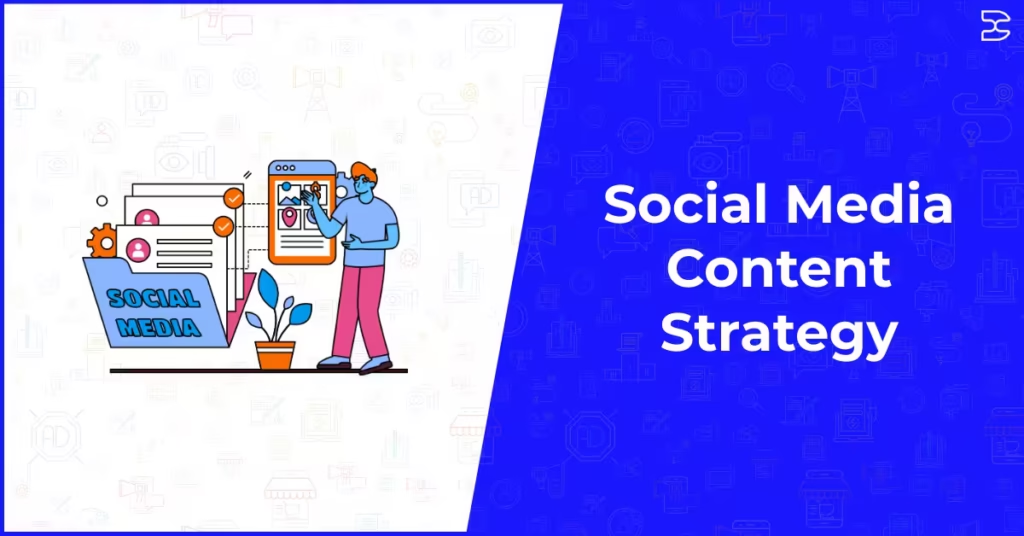
This is where a Social Media Content Strategy separates the professionals from the amateurs. It isn’t just a calendar of what to post; it is the strategic architecture of why you are posting, who you are helping, and how you will measure success.
Whether you are a solo founder trying to build a personal brand or a marketing manager at a scaling SaaS company, this guide will walk you through building a content engine that drives real business results, not just vanity metrics.
Before you open TikTok or design a single Instagram graphic, you need to answer two uncomfortable questions. Most businesses skip this and go straight to “making cool videos.” That is a mistake.
“Going viral” is not a strategy; it’s a lottery ticket. A real strategy requires specific business objectives. In 2026, we categorize these into three buckets:
The Rule: Choose one primary goal per quarter. If you try to do all three at once, your content will feel confused.
Stop defining your audience as “Females, 25-45.” That is a demographic, not a person. You need to understand the psychographics.
Your content strategy is simply the bridge between their Pain and their Desire.
Now that we know the Who, let’s talk about the What. To avoid “writer’s block,” you need Content Pillars. These are 3-5 core themes your brand will consistently discuss.
In 2026, the most successful brands don’t just sell; they teach and entertain.
The Golden Ratio: Use the 80/20 Rule. 80% of your content should be value-driven (Education/Inspiration), and only 20% should be promotional. If you ask for a sale before you’ve given value, you lose.
Not all content fits all platforms. A common pitfall is “Copy-Paste Marketing”, taking a LinkedIn text post and screenshotting it for Instagram. Don’t do this.
Pro Tip: Don’t try to be everywhere. Pick two platforms and dominate them. It is better to be amazing on LinkedIn and Instagram than average on five different apps.
This is where strategy meets execution. How do you actually produce high-quality content without burning out? The answer is Batching.
Marketing professionals use this to turn one idea into ten pieces of content.
By doing this, you aren’t creating content every day; you are distributing content every day.
Use AI as your Junior Copywriter, not your Creative Director.
A strategy is a living thing. It must evolve. Once a month, sit down for a “Content Audit.”
The Pivot: If a certain content pillar (e.g., “Motivational Quotes”) gets likes but no leads, and another pillar (e.g., “Technical Tutorials”) gets fewer likes but tons of website clicks, do more tutorials. Follow the data, not the dopamine.
The secret that no “guru” wants to tell you is that the best strategy in the world fails without consistency. A mediocre strategy executed daily for a year will beat a perfect strategy executed once a month.
Building a social media presence is like pushing a flywheel. At first, it’s heavy. You post, and nothing happens. You post again, and get one like. But if you keep pushing, aligning your content with your audience’s pain points, respecting the platform culture, and analyzing your results, the wheel starts to spin on its own.
Your audience is waiting. You have the map. Now, start the car.
From in-depth discovery to ROI-focused execution, every step is designed to help your business grow smarter, faster, and stronger in the digital space.

Copyright © 2026 XproDigitals.com All rights reserved.