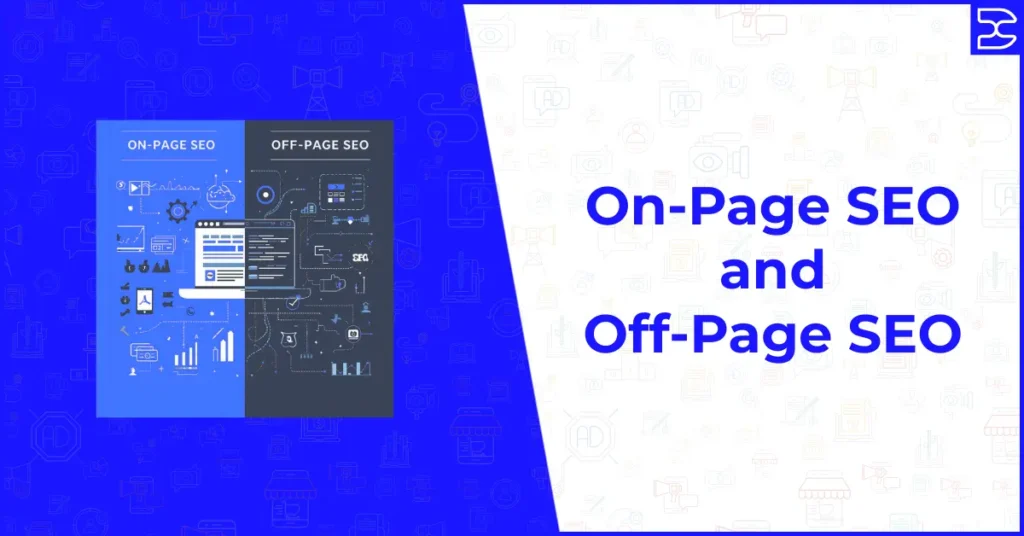


Search Engine Optimization (SEO) is the backbone of sustainable digital growth. Businesses that rank organically gain consistent traffic, higher credibility, and better conversion opportunities. However, SEO is not a single tactic – it is a combination of strategies that work together.
Two foundational pillars of SEO are On-Page SEO and Off-Page SEO. While one focuses on optimizing elements within your website, the other strengthens your website’s authority across the internet.
Understanding how both work – and how they complement each other – is essential for ranking in 2026’s AI-driven search landscape.
On-Page SEO refers to the optimization techniques implemented directly on your website to improve search visibility and user experience. It ensures that search engines can properly understand, crawl, and rank your content.
The goal of on-page optimization is simple: make your content relevant, structured, and valuable for both users and search engines.
This may also help you – Complete On-Page SEO Checklist (2026)
Content remains the most critical ranking factor. Pages must be:
Search engines prioritize content that demonstrates expertise and solves real user problems.
Keywords help search engines understand page relevance. However, modern SEO focuses on natural integration, not keyword stuffing.
Best practices include:
Your title tag directly influences rankings, while meta descriptions impact click-through rate (CTR).
An optimized title should:
Meta descriptions should be persuasive, clear, and around 150–160 characters.
Clean URLs improve crawlability and user trust.
Example:
https://www.example.com/on-page-seo-guide
Avoid unnecessary parameters or long, cluttered slugs.
Internal links distribute authority across pages and help search engines understand site structure.
Effective internal linking:
Technical health directly impacts rankings. Key factors include:
Search engines reward websites that provide seamless user experiences.
On-page SEO creates the foundation for sustainable visibility.
Off-Page SEO refers to actions taken outside your website to improve authority, trust, and credibility. It signals to search engines that other sources recognize your content as valuable.
While on-page SEO builds relevance, off-page SEO builds reputation.
Backlinks remain one of the strongest ranking signals. When authoritative websites link to your content, search engines interpret it as a vote of confidence.
Quality matters more than quantity. A few high-authority links are more valuable than dozens of low-quality ones.
Common backlink strategies include:
Even unlinked brand mentions contribute to credibility. Search engines increasingly recognize brand signals as indicators of authority.
Strong branding improves both SEO and user trust.
Even unlinked brand mentions contribute to credibility. Search engines increasingly recognize brand signals as indicators of authority.
Strong branding improves both SEO and user trust.
Reviews, testimonials, and ratings influence both search visibility and user decisions.
Positive reviews on platforms like Google Business Profile strengthen local SEO performance.
Creating high-quality content is not enough. Promoting it through outreach, communities, newsletters, and partnerships increases exposure and link acquisition opportunities.
Off-page SEO amplifies the impact of your on-page efforts.
On Page SEO | Off Page SEO | |
Control | On-Page SEO is fully within your control. | Off-Page SEO depends on external websites and audiences. |
Focus | On-Page SEO improves content relevance and usability. | Off-Page SEO strengthens authority and trust. |
Impact | On-Page SEO helps search engines understand your website. | Off-Page SEO signals that others trust your website. |
Both are essential – neither works effectively in isolation.
Think of on-page SEO as building a strong foundation and off-page SEO as earning recognition for that foundation.
If your website has excellent backlinks but weak content, users will leave quickly – hurting engagement signals.
If your website has great content but no backlinks, search engines may struggle to trust and rank it competitively.
Sustainable SEO success requires:
In 2026, search engines use AI systems that analyze not just keywords, but user behavior, authority signals, and overall content depth.
SEO is a long-term strategy, not a quick fix.
The answer is simple: both.
Modern algorithms evaluate:
A balanced approach consistently outperforms isolated tactics.
Businesses that invest in ethical, experience-driven SEO strategies achieve stronger and more stable rankings.
On-Page SEO ensures your website is optimized, relevant, and technically sound. Off-Page SEO builds authority, trust, and credibility across the web.
Together, they form a complete SEO strategy capable of delivering sustainable organic growth.
If your goal is long-term visibility, competitive rankings, and predictable traffic, you must invest in both.
In today’s search landscape, optimization is not optional – it is strategic infrastructure for digital success.

From in-depth discovery to ROI-focused execution, every step is designed to help your business grow smarter, faster, and stronger in the digital space.

Copyright © 2026 XproDigitals.com All rights reserved.