Table of Contents
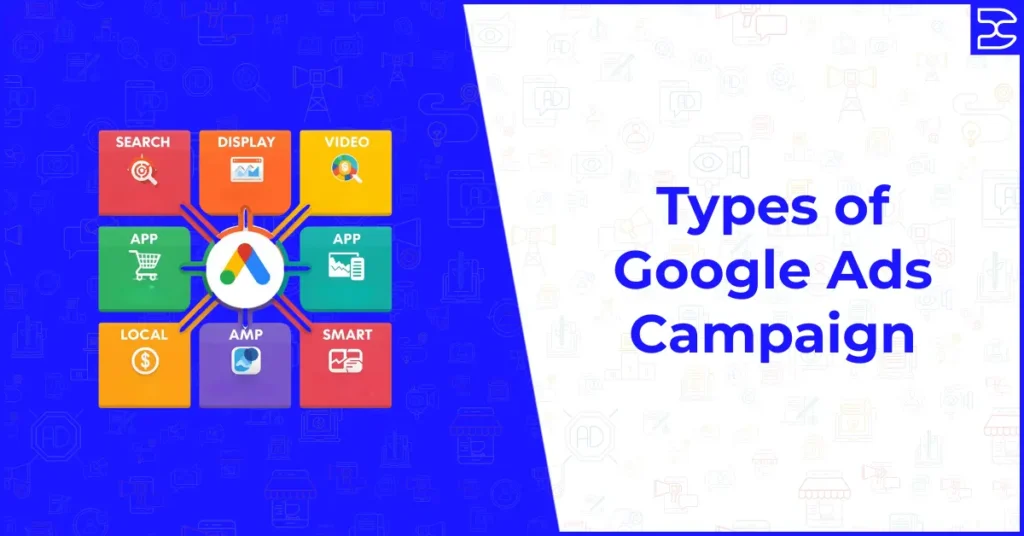
ToggleDifferent Types of Google Ads Campaigns: Complete Guide for 2026
Google Ads remains one of the most powerful digital advertising platforms for businesses seeking immediate visibility and measurable results. With billions of daily searches and an expansive display network, Google offers multiple campaign types tailored to specific marketing goals.
Choosing the right Google Ads campaign type is critical. Each format serves a different objective – from generating leads to increasing brand awareness or driving eCommerce sales.
This guide explains the different types of Google Ads campaigns and how they work in 2026.
1. Search Campaigns
Search campaigns are the most commonly used Google Ads format. These ads appear on Google search results pages when users search for specific keywords.
How It Works:
Advertisers bid on keywords relevant to their products or services. When users search those terms, text-based ads appear above or below organic results.
Best For:
- Lead generation
- Service-based businesses
- High-intent traffic
- Local businesses
Why It’s Powerful:
Search campaigns target users with strong purchase intent. If someone searches “best digital marketing agency near me,” they are already looking for a solution.
2. Display Campaigns
Display campaigns show visual banner ads across Google’s Display Network, which includes millions of websites, apps, and YouTube placements.
How It Works:
Ads are shown based on audience targeting, interests, or website placements rather than search intent.
Best For:
- Brand awareness
- Retargeting
- Expanding reach
- Visual branding
Key Advantage:
Display ads help businesses stay visible even when users are not actively searching.
3. Video Campaigns
Video campaigns run primarily on YouTube and across video partner sites.
Formats Include:
- Skippable in-stream ads
- Non-skippable ads
- In-feed video ads
- Bumper ads
Best For:
- Brand storytelling
- Product demonstrations
- Audience engagement
- Remarketing
Video advertising is especially effective for capturing attention and increasing recall.
4. Shopping Campaigns
Shopping campaigns are designed specifically for eCommerce businesses. These ads display product images, prices, store names, and reviews directly in search results.
How It Works:
Instead of bidding on keywords, advertisers upload product data through Google Merchant Center. Google matches product listings to relevant searches.
Best For:
- Online stores
- Product-based businesses
- Price comparison visibility
Why It Converts Well:
Shopping ads provide visual and pricing information upfront, increasing qualified clicks.
5. Performance Max Campaigns
Performance Max is an AI-driven campaign type that runs across all Google channels – Search, Display, YouTube, Gmail, Discover, and Maps.
How It Works:
Advertisers provide creative assets and goals. Google’s machine learning system automatically optimizes placements and bidding.
Best For:
- Businesses seeking full-funnel automation
- eCommerce scaling
- Multi-channel visibility
Advantage:
It simplifies campaign management while maximizing conversions using automation.
6. App Campaigns
App campaigns are built to promote mobile applications across Google Search, Play Store, YouTube, and Display Network.
Best For:
- Increasing app installs
- Driving in-app actions
- Promoting mobile engagement
Google automatically optimizes targeting based on user behavior and app performance data.
7. Local Campaigns (Now Integrated into Performance Max)
Local campaigns were designed to drive store visits and in-person traffic. Today, these objectives are largely handled through Performance Max campaigns.
Best For:
- Physical retail stores
- Restaurants
- Local service providers
These campaigns optimize ads for users most likely to visit your physical location.
8. Discovery Campaigns
Discovery campaigns appear in Google Discover feeds, Gmail promotions, and YouTube home feeds.
Best For:
- Visual storytelling
- Engaging new audiences
- Mid-funnel marketing
Discovery ads use high-quality images and audience targeting to attract users before they begin active searching.
How to Choose the Right Google Ads Campaign Type
The best campaign depends on your objective:
- Generate leads → Search Campaign
- Increase brand awareness → Display or Video Campaign
- Sell products online → Shopping or Performance Max Campaign
- Promote mobile app → App Campaign
- Drive store visits → Performance Max (local focus)
A strategic advertiser often combines multiple campaign types to achieve full-funnel coverage and maximize results.
Full-Funnel Strategy Using Multiple Campaigns
Successful advertisers in 2026 rarely rely on just one campaign type.
Example strategy:
- Use Display or Video campaigns for awareness.
- Retarget users with Search campaigns.
- Convert buyers using Shopping or Performance Max.
This layered approach increases both visibility and conversion rates.
Key Trends in Google Ads for 2026
Modern Google Ads relies heavily on:
- AI-powered bidding strategies
- Audience signals
- First-party data
- Creative asset diversity
- Conversion tracking accuracy
Manual optimization is decreasing, while machine learning-driven automation is increasing.
Businesses that provide strong creative assets and accurate tracking data perform best in this environment.
Common Mistakes to Avoid
- Choosing campaign type without defining goals
- Ignoring conversion tracking
- Using low-quality creatives
- Not testing multiple formats
- Over-relying on automation without strategy
Google Ads is powerful, but strategic planning remains essential.
Final Thoughts
Google Ads offers multiple campaign types, each designed for specific marketing objectives. Search campaigns capture high-intent users. Display and Video build awareness. Shopping drives product sales. Performance Max automates cross-channel reach.
The most successful advertisers in 2026 understand that no single campaign type works in isolation. A structured, data-driven approach – aligned with clear business goals – delivers the strongest results.
Choosing the right campaign type is not about complexity. It is about alignment between advertising objectives and platform capabilities.
When implemented strategically, Google Ads becomes one of the most scalable growth channels available to modern businesses.
Frequently Asked Questions (FAQs)
The main Google Ads campaign types in 2026 include Search, Display, Video, Shopping, Performance Max, App, and Discovery campaigns. Each campaign type is designed to achieve specific marketing objectives such as lead generation, brand awareness, product sales, or app promotion.
Search campaigns are generally the best option for lead generation because they target users actively searching for products or services. This high purchase intent often results in better conversion rates and qualified leads.
Search campaigns show text ads to users searching for specific keywords on Google, while Display campaigns show visual ads across websites, apps, and YouTube. Search focuses on intent-driven traffic, whereas Display focuses on awareness and audience targeting.
Performance Max can deliver strong results by using Google's AI to optimize ads across multiple channels. However, whether it is better depends on your goals, budget, and available creative assets. Many businesses achieve the best results by combining Performance Max with other campaign types.
Shopping campaigns and Performance Max campaigns are typically the most effective for eCommerce businesses. They showcase product images, prices, and reviews directly in search results, helping attract highly qualified buyers.
Yes, running multiple campaign types simultaneously is often recommended. A full-funnel strategy may use Display or Video campaigns for awareness, Search campaigns for lead generation, and Shopping or Performance Max campaigns for conversions and sales.
Our Related Posts