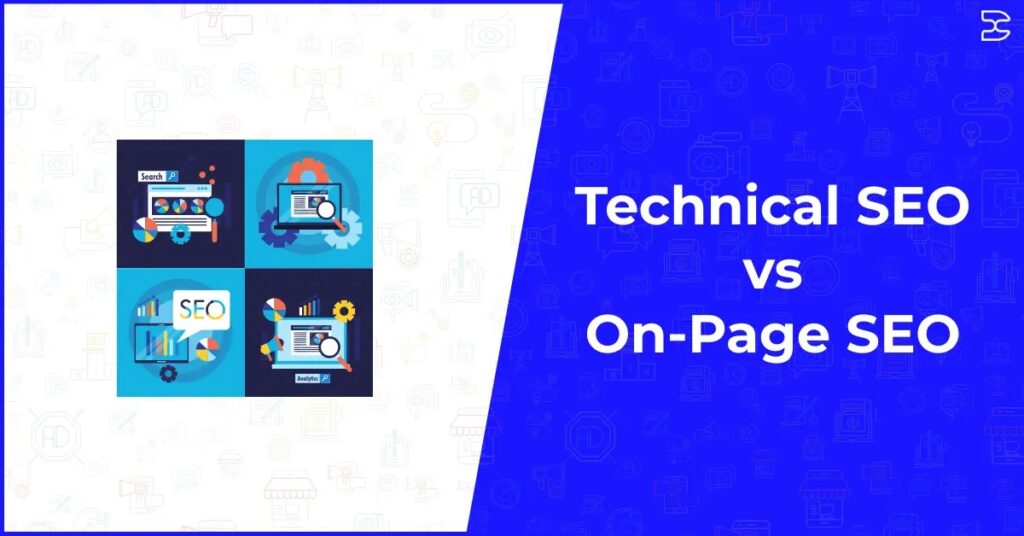


In 2026, ranking on Google is no longer just about keywords. Search engines evaluate page experience, technical health, content depth, and user intent simultaneously.
Search Engine Optimization (SEO) is a critical component of digital marketing that helps websites improve their visibility and ranking on search engines. As competition on the internet continues to grow, businesses and content creators must adopt structured SEO strategies to reach their target audience effectively. SEO is not a single technique but a combination of multiple practices that work together to enhance a website’s performance. Among these practices, Technical SEO and On-Page SEO form the backbone of any successful SEO strategy.
Although both technical SEO and on-page SEO aim to improve search engine rankings, they focus on entirely different aspects of website optimization. Technical SEO ensures that a website functions smoothly from a technical perspective, while on-page SEO focuses on improving content quality and relevance. Understanding how these two differ – and how they complement each other – is essential for achieving long-term SEO success.
On-page SEO refers to the optimization of elements that exist directly on a webpage. These elements are visible to users and help search engines understand the context, relevance, and quality of the content.
Keywords are one of the most important components of on-page SEO. They help search engines identify what a page is about. Keywords should be placed strategically in titles, headings, URLs, and throughout the content. However, excessive keyword usage can lead to keyword stuffing, which negatively affects rankings.
High-quality content is essential for effective on-page SEO. Search engines prioritize content that is informative, original, and relevant to user intent. Well-written content increases user engagement, encourages longer time spent on the page, and improves credibility.
Title tags and meta descriptions appear on search engine results pages and play a significant role in attracting users. A well-optimized title improves visibility, while a compelling meta description increases click-through rates.
Using heading tags such as H1, H2, and H3 helps organize content logically. This improves readability for users and allows search engines to understand the hierarchy of information on a page.
Internal links connect related pages within a website. They help users navigate easily and allow search engines to crawl the site more effectively. Proper internal linking also distributes page authority across the website.
Images should be optimized using appropriate file sizes and descriptive alt text. This improves page loading speed and accessibility while also contributing to image search rankings.
Technical SEO focuses on optimizing the backend structure of a website. Its main purpose is to ensure that search engines can crawl, index, and rank webpages without encountering technical issues.
Website speed is a crucial ranking factor. Slow-loading websites provide a poor user experience and may result in higher bounce rates. Optimizing code, compressing images, and improving server performance can significantly enhance loading speed.
With the rise of mobile-first indexing, search engines prioritize websites that perform well on mobile devices. A responsive design ensures that a website adapts to different screen sizes and devices.
XML sitemaps help search engines understand the structure of a website. They guide search engine crawlers to important pages and ensure efficient indexing.
The robots.txt file controls which pages search engines are allowed to crawl. Proper configuration prevents indexing of duplicate, private, or unnecessary pages.
Secure websites using HTTPS are trusted more by both users and search engines. Security has become a ranking factor, making HTTPS essential for modern websites.
Structured data helps search engines understand the content of a webpage more clearly. It can enhance search listings by enabling rich results such as star ratings and FAQs.
On-page SEO focuses on content and visible page elements, while technical SEO focuses on backend structure and website performance.
The purpose of on-page SEO is to improve relevance and user engagement. Technical SEO aims to ensure accessibility, crawlability, and proper indexing by search engines.
Technical SEO acts as the foundation of a website. Without proper technical optimization, even the best content may fail to rank. On-page SEO builds on this foundation by adding value and relevance.
Technical SEO and on-page SEO are not independent strategies; they complement each other. Technical SEO ensures that a website is fast, secure, and accessible, while on-page SEO ensures that the content aligns with user intent and search engine guidelines.
For instance, a webpage with high-quality content may not rank well if it loads slowly or is not mobile-friendly. Similarly, a technically perfect website may struggle to rank if the content is poorly written or irrelevant. Therefore, a balanced approach that integrates both technical and on-page SEO is essential.
Search engines aim to provide users with the most relevant and reliable results. This means websites must meet both technical standards and content quality expectations. Ignoring technical SEO can prevent search engines from properly accessing a website, while ignoring on-page SEO can reduce relevance and user engagement.
By combining strong technical foundations with effective on-page optimization, websites can achieve higher rankings, improved user experience, and consistent organic traffic. In the long run, this balanced approach ensures sustainable SEO growth and better online visibility.

From in-depth discovery to ROI-focused execution, every step is designed to help your business grow smarter, faster, and stronger in the digital space.

Copyright © 2026 XproDigitals.com All rights reserved.