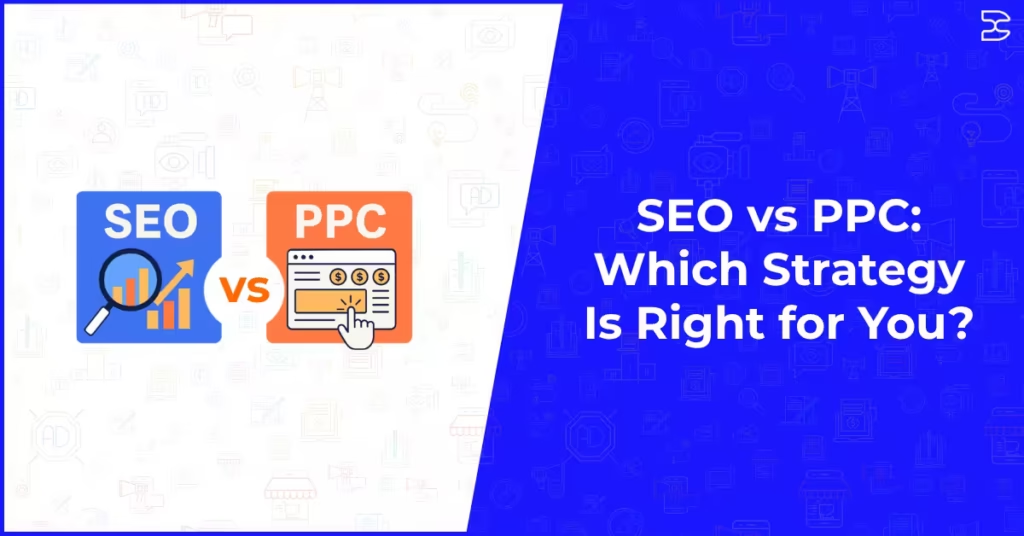
SEO (Search Engine Optimization) is a long-term strategy that improves your website’s organic rankings in search results without paying per click. PPC (Pay-Per-Click) advertising, such as Google Ads, places your business at the top of search results instantly – but you pay every time someone clicks. SEO takes 3–6 months to show results but delivers compounding ROI over time. PPC delivers instant visibility but stops the moment your budget runs out. The right choice depends on your budget, timeline, business goals, and competitive landscape. Most businesses benefit from a blended strategy.
Every business owner investing in digital marketing faces the same critical question at some point: Should I focus on SEO or PPC?
It’s not a simple answer – and anyone who tells you it is probably hasn’t run a campaign with real money on the line. Both SEO and PPC are proven, powerful channels. Both can drive qualified traffic, generate leads, and grow revenue. But they work in fundamentally different ways, serve different business situations, and carry very different cost structures.
Whether you’re a startup with a lean budget, an e-commerce brand trying to scale fast, or a local service business trying to outrank competitors – this guide breaks down everything you need to make the right call. No fluff. No vague advice. Just a clear, data-backed comparison so you can invest your marketing dollars wisely.
What Is SEO?
Search Engine Optimization (SEO) is the practice of optimizing your website so it ranks higher on search engine results pages (SERPs) organically – meaning without paying for placement.
SEO covers a wide range of tactics including:
- On-page SEO – optimizing content, headings, meta tags, keyword usage, and internal linking
- Technical SEO – improving site speed, mobile-friendliness, crawlability, and Core Web Vitals
- Off-page SEO – building authority through backlinks, digital PR, and brand mentions
- Local SEO – optimizing for geo-specific searches like “plumber near me” or “best dentist in Austin”
The goal is to earn Google’s trust over time so your website appears on page one – ideally in the top three results – for keywords your target audience is actively searching.
What Is PPC?
Pay-Per-Click (PPC) advertising is a model where you pay a fee every time someone clicks your ad. Google Ads is the most popular PPC platform, but the category also includes Microsoft Ads (Bing), Facebook Ads, Instagram Ads, LinkedIn Ads, and more.
In the context of search marketing, PPC means bidding on keywords so your ad appears above or alongside organic results. You set a daily budget, choose your target keywords, write compelling ad copy, and pay only when a user clicks through to your site.
Key components of a PPC campaign include:
- Search Ads – text ads shown at the top of Google search results
- Display Ads – visual banner ads shown across the Google Display Network
- Shopping Ads – product-based ads for e-commerce stores
- Remarketing Ads – ads that re-engage users who have previously visited your site
This may also help you – What Is Pay-Per-Click Advertising?
SEO vs PPC: Head-to-Head Comparison
Factor | SEO | PPC |
Cost | Time + resources (no per-click cost) | Pay per click (ongoing spend required) |
Time to Results | 3–6 months (sometimes longer) | Immediate – hours to days |
Longevity | Results compound and last long-term | Stops when budget stops |
Click-Through Rate | Higher trust; organic CTR can exceed 30% for top positions | Lower trust; average CTR ~2–5% |
Targeting Precision | Keyword intent-based | Advanced (demographic, device, location, retargeting) |
Cost Per Click | $0 per organic click | Can range from $0.50 to $100+ depending on industry |
Scalability | Scales slowly but sustainably | Scales fast with budget increase |
Data & Analytics | Limited (Google hides some keyword data) | Highly granular performance data |
Best For | Long-term brand authority, sustained traffic | Product launches, fast testing, high-intent buying traffic |
The Real Cost of SEO vs PPC
One of the biggest misconceptions in digital marketing is that SEO is “free.” It isn’t. SEO requires real investment – whether that’s your own time, an in-house team, or an agency retainer that typically runs anywhere from $1,500 to $10,000+ per month depending on the competitiveness of your industry.
However, the cost-per-acquisition (CPA) from SEO tends to decrease dramatically over time. Once you’ve earned strong rankings, traffic flows in with no ongoing per-click cost. A well-executed blog post ranking on page one can deliver thousands of monthly visitors for years.
PPC, on the other hand, delivers predictable, measurable results – but only as long as you’re spending. In competitive industries like insurance, legal, or finance, cost-per-click (CPC) can exceed $50–$100 per click. According to WordStream data, the average CPC across all industries on Google Ads is around $4.22, but this spikes significantly in high-value niches.
Bottom line: SEO has a higher upfront time cost but lower long-term CPA. PPC has an immediate cost but faster, more predictable returns.
When SEO Is the Right Choice
SEO is the smarter investment when:
- You’re playing the long game. If you can invest 6–12 months before expecting significant returns, SEO builds an asset – your website’s authority – that appreciates in value over time.
- You’re in a content-driven niche. Blogs, guides, tutorials, and resource pages dominate niches like health, finance, education, and home improvement. SEO is your most scalable channel here.
- You have a tight budget. If monthly ad spend isn’t sustainable, SEO allows you to build traffic with labor rather than direct spend.
- You want to build brand authority. Consumers trust organic results more than ads. Consistent first-page presence builds credibility that PPC simply can’t replicate.
- You’re targeting informational intent. Users researching “how to choose a CRM” or “best project management tools” respond better to organic content than to ads.
When PPC Is the Right Choice
PPC earns its place when:
- You need results now. Launching a new product, running a seasonal promotion, or entering a market quickly? PPC puts you at the top of Google today – not in six months.
- You’re in a hyper-competitive space. If established brands dominate organic results with years of authority, PPC lets you bypass that queue and compete immediately.
- You’re testing offers and messaging. PPC gives you real-time conversion data. Test two landing pages in a week. Find out what messaging converts before building a full content strategy around it.
- You’re targeting transactional intent. Users searching “buy running shoes online” or “emergency plumber Dallas” are ready to act. PPC captures that high-intent moment precisely.
- You have strong unit economics. If your average customer lifetime value (LTV) significantly exceeds your customer acquisition cost (CAC), even expensive clicks are profitable.
The Smarter Play: Using SEO and PPC Together
The most successful digital marketing strategies don’t choose between SEO and PPC – they leverage both strategically.
Here’s how smart marketers integrate the two:
- Use PPC data to inform your SEO strategy. Google Ads shows you exactly which keywords convert. Use that conversion data to prioritize which terms to target with content.
- Run PPC while SEO builds momentum. In the early months, PPC fills the traffic gap while your organic rankings develop. Once SEO kicks in, you can reduce paid spend.
- Double your SERP real estate. When you rank organically AND show a paid ad for the same keyword, you dominate more of the search results page, increasing overall brand visibility and click share.
- Use remarketing to capture lost SEO traffic. Users who visit your site through organic search but don’t convert can be retargeted through PPC display or social ads – turning a free click into a second chance at a conversion.
Which Is Better for ROI?
Neither SEO nor PPC universally delivers better ROI – it entirely depends on your business model, timeline, and execution quality.
A well-executed SEO program typically generates 5–12x ROI over 24 months as traffic compounds. PPC can deliver immediate positive ROI in weeks if your funnel is dialed in, but the margin compresses as ad costs rise in competitive markets.
For most businesses, the ideal approach is to start with PPC to generate quick wins and data, then scale SEO investment as organic traction builds – eventually shifting budget balance toward the channel delivering the lowest CPA.
Final Verdict
SEO is a long-term investment that builds compounding value. It’s best for businesses willing to play the long game, invest in quality content, and build genuine authority in their niche.
PPC is a precision tool for fast, targeted results. It’s best for businesses that need immediate traffic, are testing a new offer, or operate in markets where organic competition makes quick organic ranking nearly impossible.
The smartest businesses use both – letting PPC fund growth in the short term while SEO builds a traffic asset that reduces dependence on paid channels over time.
Evaluate your budget, your timeline, and your business goals. Then invest accordingly. There’s no single right answer – only the right answer for your business, right now.
Frequently Asked Questions (FAQ)
Is SEO or PPC better for small businesses?
For most small businesses, a combination works best. Start with local SEO to build sustainable organic presence, and use a small PPC budget for your highest-converting keywords or seasonal campaigns. If the budget is very tight, prioritize SEO as a long-term asset.
How long does SEO take to show results?
Most businesses see meaningful SEO results within 3 to 6 months, though highly competitive niches can take 9 to 12 months. Local SEO and low-competition niches can show results faster – sometimes within 6 to 8 weeks.
What is a good monthly budget for PPC?
There’s no universal answer, but most small-to-mid-size businesses should expect to invest at least $1,000 to $3,000 per month to generate statistically meaningful PPC data. Highly competitive industries may require $5,000–$20,000+ per month.
Can you do SEO and PPC at the same time?
Absolutely – and it’s often the recommended approach. Running both channels simultaneously allows you to generate immediate traffic through PPC while building long-term organic authority through SEO. The two strategies complement and inform each other.
Does PPC help SEO rankings?
No – PPC spending does not directly influence your organic search rankings. Google has confirmed this. However, PPC can indirectly support SEO by increasing brand searches, driving traffic that improves engagement signals, and helping you discover high-converting keywords to target organically.
Which is more cost-effective in the long run – SEO or PPC?
SEO typically delivers a lower long-term cost-per-acquisition because organic traffic doesn’t incur a per-click cost. Over a 2–3 year horizon, a well-invested SEO strategy almost always outperforms PPC in cost efficiency – assuming the business operates in a space where organic content can realistically compete.