What Is SEO Outsourcing? The Complete Business Guide for 2026
Introduction: Why Businesses Outsource SEO and Why It Often Goes Wrong
Here is a pattern we see constantly. A business decides to get serious about SEO. They either hire a junior marketing employee to handle it alongside other responsibilities, or they sign a contract with an agency that promises page one rankings within 90 days. Six months later, organic traffic has not moved and nobody can clearly explain why.
The pain in both scenarios is identical. Money spent, time lost, and no clearer picture of where the gap is. The frustration is made worse by the fact that SEO genuinely works when executed correctly. The problem is usually not the channel. It is the structure of who is doing what, whether they have the right expertise, and whether there is a clear accountability framework around what they deliver.
SEO outsourcing, when done correctly, is one of the most efficient ways for a business to build organic visibility without hiring an entire in-house team. When done incorrectly, it is one of the fastest ways to waste budget on activity that produces no measurable return.
This guide covers what SEO outsourcing actually is, which tasks are best outsourced, how to choose the right partner, what to pay, and how to manage an outsourced SEO relationship to ensure it consistently delivers business results. Whether you are considering outsourcing for the first time or reviewing a relationship that has not performed, everything you need to make the right decision is here.
This guide focuses specifically on the outsourcing decision. For a strategic foundation on what SEO should be delivering for your business before you decide who should implement it, our guide on what SEO is and how it works gives the grounding every business owner needs before engaging any SEO provider.
What Is SEO Outsourcing?
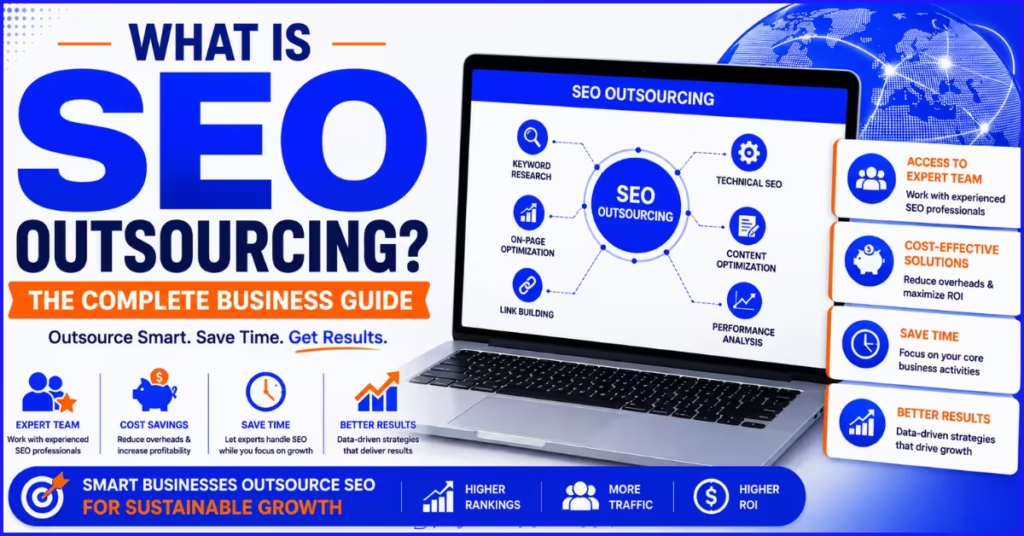
SEO outsourcing is the practice of hiring an external individual, team, or agency to handle some or all of your search engine optimization activity. Rather than employing a full in-house SEO team, you contract out the work to specialists who implement your SEO strategy on your behalf.
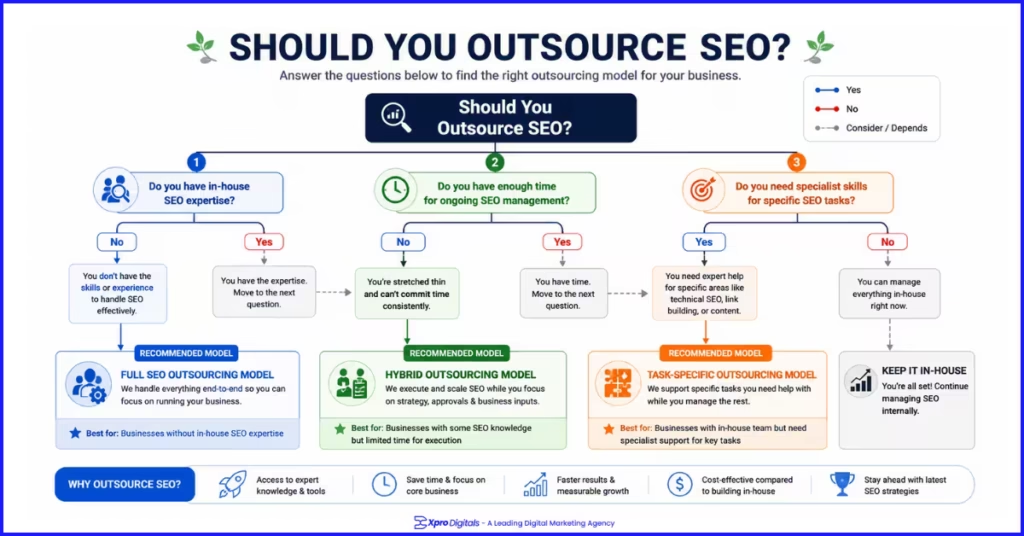
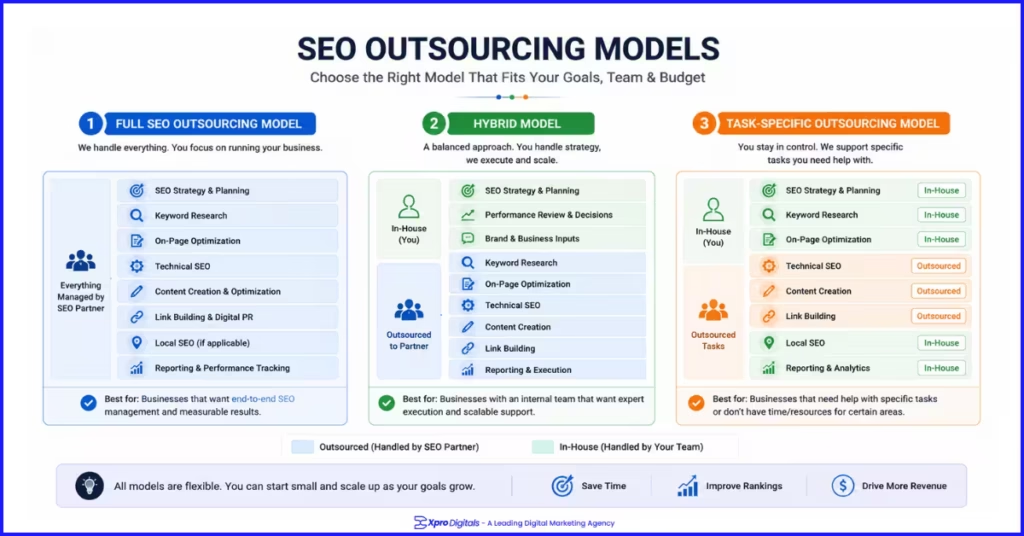
Outsourcing can cover your entire SEO function or specific components of it. A business might outsource only technical SEO auditing while keeping content creation in-house. Another might outsource content and link building while an internal team manages keyword strategy and reporting. A third might outsource their entire SEO operation to a managed service provider. The model you choose depends on your internal capabilities, budget, and the complexity of what you need.
SEO outsourcing is not the same as buying cheap SEO packages. Effective outsourcing is a structured engagement with clear deliverables, defined KPIs, regular reporting, and a provider who understands your business goals. The word outsourcing describes a relationship structure, not a quality level.
What SEO Outsourcing Covers
| SEO Function | Can Be Outsourced? | Commonly Outsourced To |
| Technical SEO audit and fixes | Yes | SEO agency or technical specialist |
| Keyword research and strategy | Yes | SEO agency or SEO consultant |
| On-page optimization | Yes | SEO agency or content SEO specialist |
| Content writing and optimization | Yes | SEO content writer or agency |
| Link building and digital PR | Yes | Link building agency or outreach specialist |
| Local SEO and GBP management | Yes | Local SEO agency or specialist |
| SEO reporting and analytics | Yes | SEO agency or reporting specialist |
| SEO strategy and direction | Partially | Senior SEO consultant or agency strategist |
| Brand and messaging decisions | No | Internal team only |
| Business goal setting | No | Internal leadership only |
Why Businesses Outsource SEO: The Real Reasons
The most straightforward reason businesses outsource SEO is access to expertise they do not have in-house. SEO in 2026 requires proficiency across technical website management, keyword research, content strategy, structured data, link acquisition, and performance analytics. Building a team with all of those competencies in-house requires significant hiring investment that most businesses cannot justify until their organic revenue is already substantial.
A second reason is speed. A specialist agency or consultant with established processes, tools, and workflows can begin delivering SEO improvements faster than an in-house hire who needs to be onboarded, trained, and equipped. For businesses that need to grow organic traffic within a defined timeframe, the speed advantage of outsourcing is significant.
A third reason is scalability. An outsourced SEO partner can scale activity up or down based on your needs and budget. You pay for what you need rather than maintaining a fixed headcount that may be over or underutilised depending on the season or growth stage of the business.
Outsourced SEO vs In-House SEO: Direct Comparison
| Factor | Outsourced SEO | In-House SEO |
| Cost structure | Monthly retainer or project fee | Salary, benefits, tools, training |
| Expertise level | Specialist skills across multiple areas | One to two people with varying depth |
| Speed to start | Fast, processes already established | Slow, hiring and onboarding required |
| Scalability | Flexible, scale up or down | Fixed headcount, slow to scale |
| Business knowledge | Requires ongoing briefing | Deep understanding over time |
| Accountability | Contract and SLA-driven | Performance management |
| Tool access | Agency provides tool stack | Business must purchase tools separately |
| Communication | Scheduled reporting and meetings | Daily access and integration |
| Best for | SMEs, ecommerce, growing businesses | Large enterprise with complex ongoing needs |
What Tasks Should You Outsource and What Should You Keep In-House?
Not every SEO task is equally suited to outsourcing. Some activities benefit from the deep business knowledge that only internal teams have. Others benefit from the specialist expertise and dedicated tooling that agencies provide. The most effective SEO outsourcing models combine both.
We worked with a SaaS company that outsourced their entire SEO function to an agency that produced technically competent content with no commercial context. The articles ranked for target keywords but failed to attract the specific buyer persona the business needed.
Revenue from organic traffic was negligible despite growing traffic numbers. The fix was bringing product positioning and ICP definition back in-house while keeping technical SEO, link building, and content production outsourced. Organic qualified leads grew 180% over the following four months.
What to Outsource vs Keep In-House
| Task | Outsource | Keep In-House | Why |
| Technical SEO audit | Yes | Requires specialist tools and developer knowledge | |
| Keyword research | Yes | Requires SEO tool expertise and competitive analysis | |
| On-page optimization | Yes | High-volume task, benefits from specialist efficiency | |
| Content writing | Partially | Partially | Outsource production, keep tone and positioning in-house |
| Link building | Yes | Requires outreach networks and specialist skills | |
| SEO strategy | Partially | Partially | Agency provides framework, business aligns to goals |
| Business messaging | Yes | Only internal team understands brand positioning | |
| Buyer persona definition | Yes | Internal knowledge of customer needs is irreplaceable | |
| Conversion optimization | Partially | Partially | Requires both data skills (outsource) and product knowledge (in-house) |
| SEO reporting review | Yes | Agency produces reports, internal team reviews and acts |
Types of SEO Outsourcing Models
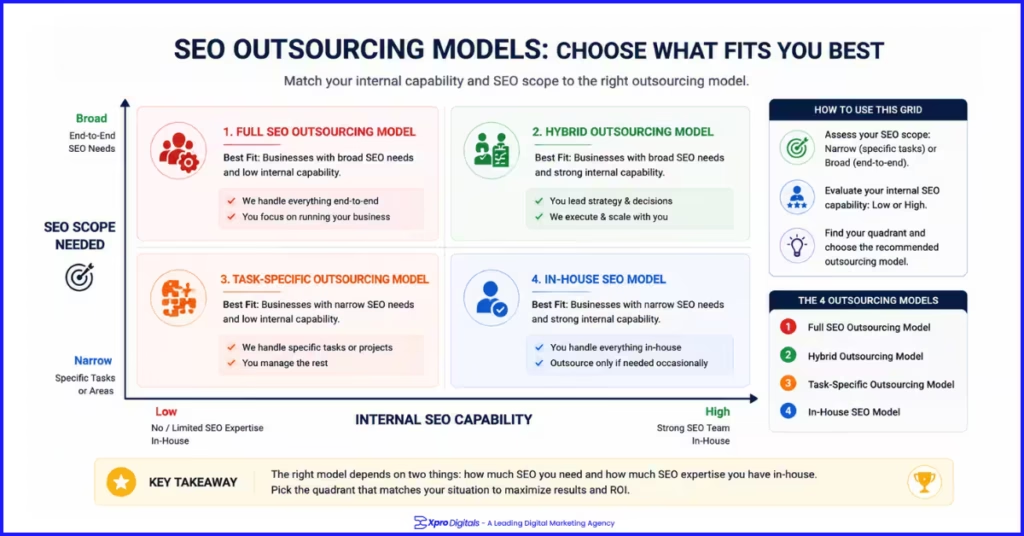
There are four main models for outsourcing SEO. Each suits a different business size, budget, and level of internal SEO capability. Choosing the wrong model is one of the most common reasons outsourced SEO underdelivers.
Model 1: Full-Service SEO Agency
A full-service agency manages your entire SEO operation. They handle strategy, technical audits, content, link building, and reporting.
This model suits businesses with limited internal SEO resources, complex organic needs, or aggressive growth targets.
The cost is higher than other models but so is the scope of activity. Monthly retainers typically range from 1,500 to 10,000 USD or more depending on the market, scope, and agency calibre.
Model 2: SEO Consultant
An independent SEO consultant provides strategic direction, auditing, and implementation oversight but typically does not deliver all the production work themselves.
They may work alongside your internal team or coordinate a network of specialists. This model suits businesses that have some in-house content or development capacity but need experienced strategic leadership.
Day rates for senior consultants range from 500 to 1,500 USD depending on experience and market.
Model 3: Task-Specific Outsourcing
You outsource only specific SEO tasks, such as link building, technical auditing, or content production, while managing strategy and other functions in-house.
This is the most flexible model and suits businesses with internal SEO knowledge that need specialist support in specific areas.
Costs vary significantly by task type: link building campaigns range from 500 to 5,000 USD per month, content production from 100 to 500 USD per piece.
Model 4: White Label SEO
White label SEO is where an agency outsources SEO delivery to another provider who operates invisibly under the agency’s brand.
This is most relevant to marketing agencies offering SEO services to their own clients without in-house SEO capability.
The end client receives SEO services under the agency’s name while another provider delivers the actual work. Quality control and communication clarity are the primary risks to manage in this model.
How to Choose the Right SEO Outsourcing Partner
The SEO industry has a low barrier to entry. Anyone can build a website, use the word ‘agency’, and pitch SEO services. This makes choosing the right outsourcing partner one of the most consequential decisions in the engagement, and one of the most common sources of disappointment when it goes wrong.
We have consulted with businesses that paid three to four months of retainer fees before realising their provider was delivering activity reports rather than ranking improvements. The common thread: they had not evaluated the right things before signing a contract.
10-Point SEO Partner Evaluation Checklist
| Evaluation Criteria | What Good Looks Like | Red Flag |
| Proof of results | Case studies with specific metrics and timelines | Vague claims, no specific client examples |
| Technical knowledge | Can explain Core Web Vitals, canonicals, crawl budget clearly | Uses jargon without explaining what it means |
| Content capability | Sample work matches your quality and intent requirements | Generic, thin samples or no samples provided |
| Reporting transparency | Clear metrics tied to business outcomes, not vanity metrics | Reports filled with rankings and impressions only |
| Communication process | Named account manager, defined meeting cadence | No clear point of contact, email only |
| Strategy alignment | Proposes strategy based on your specific goals | Same strategy proposal for every prospect |
| Tool stack | Uses industry-standard tools (Ahrefs, Semrush, GSC, Screaming Frog) | Cannot name tools they use or uses only free tools |
| Contract terms | Reasonable notice period (1-3 months), clear deliverables | Long lock-in, vague scope, no defined deliverables |
| Industry experience | Has worked with businesses in your sector or similar | No relevant sector experience |
| Ethical practices | Clear on what link building looks like, no guaranteed rankings | Guarantees specific ranking positions within set timeframe |
For a structured framework on evaluating SEO agency capability before committing to a retainer, our guide on how to choose an SEO agency in 2026 covers every evaluation criterion with specific questions to ask at each stage of the selection process.
Red Flags in SEO Outsourcing: What to Avoid
The most damaging SEO outsourcing decisions are made when businesses accept promises that contradict how Google actually works. If a provider guarantees page one rankings within a specific timeframe, they are either misrepresenting their capability or planning to use manipulative tactics that will produce short-term gains followed by penalties.
SEO Outsourcing Red Flags
| Red Flag | Why It Is a Problem | What It Often Means |
| ‘Guaranteed page one rankings’ | No one can guarantee Google rankings | Likely using black hat tactics or overpromising |
| ‘We have a special relationship with Google’ | Google has no such arrangements with agencies | Deliberate deception |
| Activity reports with no outcome data | Busy work without results | Provider is measuring effort not performance |
| No clear account manager | Poor communication structure | Low service quality, high client churn |
| Extremely low pricing | Cannot cover real tool and labour costs | Offshore churn operation with low quality output |
| Vague deliverables in the contract | No accountability for what gets done | Can exit claiming they delivered what was agreed |
| No access to your own Search Console data | Provider controls the data you see | Hiding underperformance or restricting transparency |
| Bulk backlink packages | Violates Google webmaster guidelines | Risk of manual penalty to your domain |
| No onboarding process | Does not understand your business | Generic strategy not tailored to your goals |
How Much Does SEO Outsourcing Cost?
SEO outsourcing costs vary significantly by scope, market, provider type, and geographic location. Businesses should be sceptical of both very low and very high prices without corresponding clarity on what is delivered at each investment level.
SEO Outsourcing Cost Benchmarks
| Model | Typical Monthly Cost (USD) | What It Usually Includes |
| Full-service agency (small business) | 1,500 to 3,000 | Technical audit, on-page, content (2-4 pieces), basic link building, reporting |
| Full-service agency (mid-market) | 3,000 to 8,000 | Full technical, content strategy, active link building, weekly reporting |
| Full-service agency (enterprise/ecommerce) | 8,000 to 25,000+ | Dedicated team, high-volume content, PR-led link building, custom reporting |
| SEO consultant (strategic only) | 1,500 to 5,000 | Monthly strategy sessions, audit oversight, implementation guidance |
| Task-specific: link building only | 500 to 3,000 | Outreach and placement of 5-20 links per month |
| Task-specific: content production | 100 to 500 per piece | Keyword-researched, optimised blog posts or landing pages |
| Task-specific: technical audit | 500 to 5,000 (project) | One-time crawl analysis and fix recommendation report |
| White label SEO (per client) | 500 to 2,500 | Full-service delivery branded under your agency |
The pricing trap to avoid: the cheapest option is rarely the most cost-effective. An agency charging 500 USD per month for full-service SEO cannot afford the tools, talent, or time to deliver meaningful results. You are paying for activity documentation, not organic growth.
What to Expect When You Outsource SEO: A Realistic Timeline
Managing expectations around timelines is one of the most important aspects of any outsourced SEO engagement. Businesses that expect significant traffic increases within four to six weeks of starting an engagement are set up for disappointment regardless of the quality of the provider.
Realistic SEO Outsourcing Timeline
| Timeframe | What Typically Happens | What You Should See |
| Month 1 | Onboarding, technical audit, keyword research, strategy | Access to audit report, strategy document, keyword map |
| Month 2-3 | On-page fixes, content publishing begins, link building starts | Pages being updated, first new content live, baseline rankings tracked |
| Month 3-5 | Content compounding, technical improvements recrawled | Ranking improvements on optimised pages, early organic traffic growth |
| Month 5-8 | Authority building, content cluster expansion | Measurable organic traffic growth, improving CTR data in GSC |
| Month 8-12 | Compounding results, ranking stability, competitive gains | Clear ROI data, page one appearances for target keywords |
| Month 12+ | Ongoing optimization, refresh strategy, scale | Consistent organic growth, reduced cost per acquisition over time |
How to Manage an Outsourced SEO Relationship Effectively
The quality of an outsourced SEO engagement depends as much on how the business manages the relationship as it does on the provider’s capability. The most common failure point is not the agency’s work quality. It is the absence of a structured communication and accountability framework from the client side.
Step-by-Step: Managing Your Outsourced SEO Provider
Step 1: Define Clear KPIs at the Start
Before signing any contract, agree on specific, measurable KPIs that connect to business outcomes. Organic sessions to key landing pages, organic leads or revenue, click-through rate improvements on target pages, and ranking improvements on specific keyword clusters are all appropriate KPIs. Rankings on unrelated or vanity keywords are not.
Step 2: Require a Documented Strategy
Within the first month, your provider should deliver a written SEO strategy document. This should cover their assessment of your current position, the priority areas they will focus on, the content and link building plan, and the specific tactics they will use for each. If they cannot produce this, they do not have a strategy.
Step 3: Set Up Shared Reporting Access
You should have direct read access to your Google Search Console and Google Analytics data at all times. Never allow a provider to manage your GSC account without your own admin access. Monthly reports from the agency are supplementary to your own data access, not a replacement for it.
Step 4: Review Reports Against KPIs Monthly
Do not just receive reports. Review them against the KPIs agreed at the start of the engagement. If the metrics being reported do not include the KPIs you agreed on, ask why. If the KPIs are trending in the wrong direction, request a written explanation of what is being adjusted in response.
Step 5: Conduct a Quarterly Strategy Review
Every three months, hold a structured review meeting that covers: what has been delivered versus what was planned, which KPIs are on track and which are not, any changes to the competitive landscape or Google algorithm updates that affect strategy, and the priority focus for the next quarter. Document the outcomes and agreed actions in writing.
Step 6: Evaluate the Relationship at Six Months
At six months, assess whether the engagement is delivering measurable progress toward the KPIs agreed at the start. SEO takes time, but six months is enough to see meaningful directional improvement on pages that have been actively optimised. If there is no directional improvement and no clear explanation from the provider, begin evaluating alternatives.
SEO Outsourcing for Specific Business Types
Ecommerce Stores
Ecommerce SEO outsourcing typically needs to cover technical SEO at catalogue scale, product and category page optimization, schema markup implementation, faceted navigation management, and link building.
The technical complexity of large ecommerce catalogues means a provider with specific ecommerce SEO experience is essential. Generalist agencies often underestimate the scale of technical issues in large stores.
Our guide on ecommerce SEO: what it is and how it works covers the specific SEO disciplines an outsourced provider needs to demonstrate competency in before you engage them for an ecommerce store.
Small and Local Businesses
Small and local businesses outsourcing SEO should prioritise providers with genuine local SEO expertise, including Google Business Profile management, local citation building, and review strategy alongside standard technical and on-page capabilities.
A general-purpose SEO agency that has never managed local SEO campaigns will produce generic work that does not capture the location-based queries that drive foot traffic and local leads.
Our guide on why local SEO is vital for small businesses explains the specific local search signals any outsourced provider should be addressing for businesses with a geographic service area.
B2B Companies
B2B SEO outsourcing requires providers who understand longer buying cycles, higher-value content formats, and keyword strategies that reflect how business buyers research rather than how consumers shop.
B2B SEO rarely produces high organic traffic volumes but should produce qualified leads from high-intent queries. Providers who measure success purely by traffic volume will optimize for the wrong outcomes in a B2B context.
People Also Ask: SEO Outsourcing
What Is SEO Outsourcing in Simple Terms?
SEO outsourcing means hiring an external company, agency, or individual to handle your search engine optimization work instead of doing it in-house.
You pay them to improve your website’s visibility in Google and other search engines, either for specific tasks like technical auditing or content writing, or for your entire SEO operation.
Is It Worth Outsourcing SEO?
Yes, for most businesses that lack in-house SEO expertise or capacity, outsourcing delivers better results than attempting to manage SEO as a secondary responsibility of a generalist marketing hire.
The value depends entirely on choosing a provider with genuine expertise, agreeing on clear deliverables, and managing the relationship with structured accountability. Outsourcing to a poor-quality provider is not worth it regardless of the cost.
What Are the Benefits of Outsourcing SEO?
The primary benefits are access to specialist expertise across multiple SEO disciplines, faster implementation through established processes and tools, scalability without fixed headcount costs, and the ability to focus internal resources on core business functions rather than managing a complex ongoing marketing channel.
For growing businesses, outsourced SEO typically delivers faster organic growth than building equivalent in-house capability from scratch.
What Are the Risks of Outsourcing SEO?
The main risks are choosing a provider that uses manipulative tactics that risk a Google penalty, paying for activity reports rather than organic growth, losing strategic context when business knowledge does not transfer effectively to an external provider, and dependency on an agency without building internal SEO understanding over time.
These risks are manageable with the right selection process and engagement structure.
How Do I Find a Reliable SEO Outsourcing Partner?
Request case studies with specific metrics and timelines from comparable businesses. Ask for references from existing clients. Test their technical knowledge with questions about specific SEO issues relevant to your site.
Review their own website’s organic performance. Verify they use industry-standard tools like Ahrefs, Semrush, and Screaming Frog. Start with a defined project or short initial engagement before committing to a long-term retainer.
How Much Should I Pay for Outsourced SEO?
Budget depends on your market, the competitiveness of your target keywords, and the scope of SEO work required. Small business local SEO outsourcing starts from 1,000 to 1,500 USD per month from a credible provider.
National or ecommerce SEO typically requires 3,000 USD per month minimum for meaningful activity. Anything significantly below these benchmarks for a full-service engagement should be scrutinised carefully for what is actually being delivered.
Can I Outsource SEO and Keep Some Work In-House?
Yes, and for many businesses this hybrid model delivers the best outcomes. Outsource the specialist tasks that require dedicated expertise and tooling, such as technical auditing, link building, and keyword research.
Keep in-house the activities that require deep business knowledge, such as brand messaging, product positioning, and final approval on customer-facing content.
Clear boundaries between what is managed internally and externally prevent duplication and communication gaps.
How Long Does Outsourced SEO Take to Show Results?
The first month of an outsourced SEO engagement is typically onboarding, auditing, and strategy. Months two and three see implementation begin.
Meaningful ranking improvements on actively optimised pages typically appear between months three and six.
Significant organic traffic growth develops from month five onward for sites without major technical blockers.
Competitive keywords in high-volume markets take longer, often nine to twelve months to earn first-page rankings.
What Questions Should I Ask Before Outsourcing SEO?
Ask for client references from businesses in a similar sector. Ask to see examples of the reporting format you will receive.
Ask how they handle Google algorithm updates. Ask what happens if rankings drop.
Ask which team members will actually work on your account and what their specific experience is.
Ask what tools they use for technical auditing, keyword research, and link analysis. Ask what they will not do and why.
What Is White Label SEO Outsourcing?
White label SEO is when an agency outsources SEO delivery to a specialist provider who operates under the agency’s brand.
The end client deals only with the agency and is typically unaware that a third party is delivering the work.
This model allows marketing agencies to offer SEO services without building in-house SEO capability.
Quality depends entirely on the white label provider’s standards, which the client cannot directly assess.
Should a Small Business Outsource SEO?
Yes, for most small businesses with limited marketing headcount, outsourcing SEO to a specialist is more cost-effective than hiring in-house.
A part-time SEO hire at 30,000 to 40,000 USD annual salary provides one person’s bandwidth and skill level.
A well-chosen outsourced provider at a fraction of that cost provides access to a team with broader expertise, established tools, and processes refined across multiple client engagements.
What Is the Difference Between Outsourcing SEO to an Agency vs a Freelancer?
An agency provides a team of specialists, established processes, multiple tool subscriptions, and a commercial accountability structure. They are more expensive but can handle a broader scope of work simultaneously.
A freelancer provides individual expertise, often at lower cost, but with limited bandwidth and typically narrower specialisation.
Freelancers work well for specific tasks like technical auditing or content writing. Agencies work better for ongoing full-service management.
How Do I Measure the ROI of Outsourced SEO?
Track organic sessions to your highest-value landing pages, organic leads and revenue attributed to organic channels in Google Analytics, and the cost per organic lead compared to other traffic channels.
SEO ROI compounds over time: the cost per lead from organic search typically reduces month on month as rankings strengthen and traffic grows without proportional increases in agency spend.
Measure over a twelve-month minimum to get a meaningful ROI picture.
What Happens to My SEO if I Stop Outsourcing?
Rankings earned through genuine SEO work (quality content, legitimate links, technical improvements) do not disappear immediately when you stop investing.
They decay gradually as competitors continue improving and Google recrawls and re-evaluates pages over time. A site with strong organic foundations can maintain rankings for several months without active investment.
A site built on manipulative tactics may see faster decline if those tactics were the primary driver of its positions.
Is Offshore SEO Outsourcing Worth It?
Offshore SEO outsourcing, primarily to providers in India, the Philippines, or Eastern Europe, can deliver cost savings on production tasks like content writing and technical implementation.
The quality ceiling depends on the individual provider rather than geography. Risks include communication delays, content that requires significant editing for native English markets, and less familiarity with specific regional search behaviours.
For strategic SEO work targeting competitive English-language markets, onshore or nearshore providers often deliver better outcomes.