How to Boost Your Website Visibility and Dominate Search Results
Introduction: The Real Reason Your Website Is Invisible
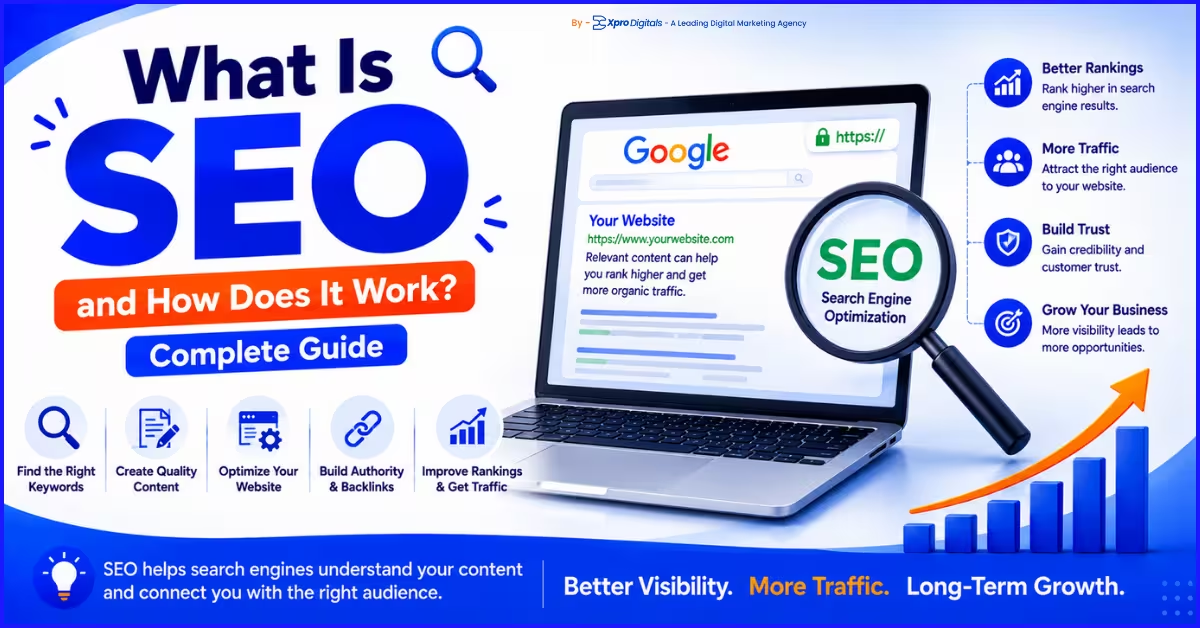
Here is what most businesses experience. They build a website. They add their services/products. They expect Google to send them customers. Then three months later, they type their business name plus their service into Google and find themselves on page three. Sometimes further. The pain is familiar. You invested in a professional website. You may have even hired someone to handle SEO. Traffic has not materialised, enquiries are not coming from search, and you have no clear picture of what is wrong or what to fix next. The problem is almost never the website itself. It is the absence of a coordinated SEO strategy that addresses all three pillars of how Google actually evaluates and ranks websites: whether it can access your content, whether that content is the best answer to specific queries, and whether your domain has enough credibility to be trusted above competitors. This guide covers every layer of SEO that businesses need to understand and act on in 2026. You will learn how search engines work, what technical SEO means in practice, how to create content that ranks and converts, how to earn authority through links, and how to capture local search traffic. You will also have a practical roadmap to implement everything in a logical sequence. This guide builds on foundational principles covered in our article on what SEO is and how it works. If you are completely new to SEO, read that first. If you have some experience and want a complete strategic framework, this guide is where to start.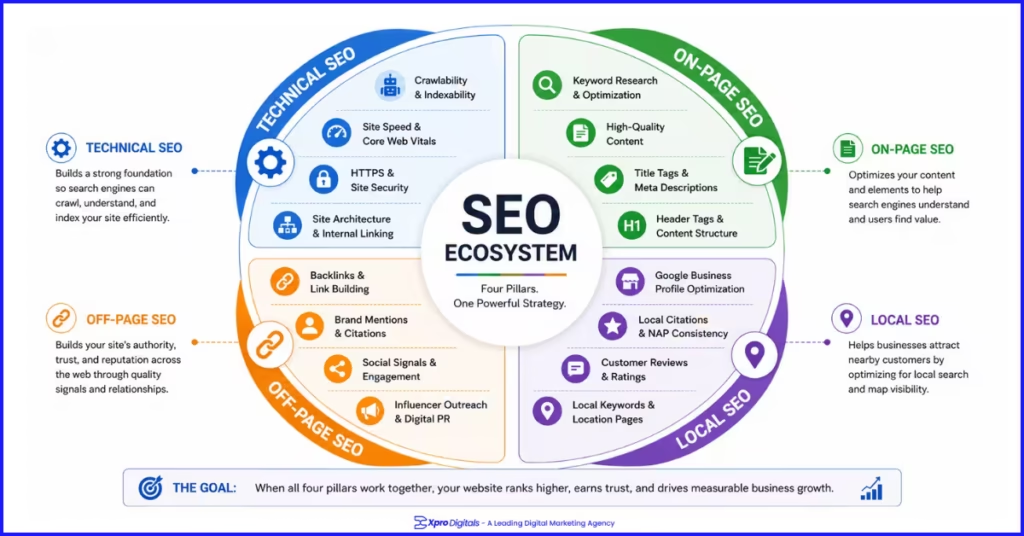
How Search Engines Work: What Every Business Owner Needs to Know
Google’s job is to find the best answer to every search query and present it to the searcher as quickly as possible. To do this, it runs three distinct processes continuously: crawling, indexing, and ranking. Understanding these three stages tells you exactly where SEO problems come from and which type of fix they need.Stage 1: Crawling
Googlebot is Google’s automated web crawler. It discovers pages by following links from pages it already knows about and by reading submitted XML sitemaps. When Googlebot visits a page, it downloads the HTML content and adds it to a processing queue. If Googlebot cannot reach a page because of a robots.txt block, a server error, or no internal links pointing to it, that page cannot rank regardless of what it contains.Stage 2: Indexing
After crawling, Google processes each page and decides whether to add it to its search index. Pages with thin content, significant duplicate content, or a no-index tag are excluded. The index is the database from which all search results are drawn. A page that is not in the index is completely invisible to organic search regardless of how well optimised it is.Stage 3: Ranking
Indexed pages are evaluated against each other for relevant queries using hundreds of signals. Google groups these signals into three broad categories. Relevance signals determine whether a page addresses the query well. Authority signals determine how credible and trustworthy the source is. Experience signals assess how well the page serves the visitor. SEO is the practice of optimising all three signal groups simultaneously.| Ranking Signal Group | Examples | Which SEO Pillar Addresses It |
| Relevance | Keyword placement, content depth, search intent match | On-Page SEO |
| Authority | Backlinks, brand mentions, domain history | Off-Page SEO |
| Experience | Core Web Vitals, mobile usability, HTTPS | Technical SEO |
| Local relevance | GBP completeness, NAP consistency, reviews | Local SEO |
Pillar 1: Technical SEO – The Foundation Everything Else Depends On
Technical SEO is the infrastructure layer of your website. It determines whether Google can access your content at all. It does not matter how good your content is or how many backlinks you have earned. If Googlebot cannot access and index your pages efficiently, your organic visibility is capped before it begins. We audited a B2B services company that had spent fourteen months publishing weekly thought leadership content and earned links from two industry publications. Organic traffic was flat. A technical crawl revealed that their entire blog was set to no-index through a staging environment setting that had been accidentally carried into production. Every post they had ever published was invisible to Google. Removing the no-index directive indexed 47 posts within three weeks. Organic traffic grew 340% in the following two months without publishing a single new post.Crawlability and Indexation Checklist
| Check | How to Verify | Fix If Failing |
| Pages are indexed in Google | URL Inspection in Search Console | Remove no-index, fix canonical, resubmit sitemap |
| Robots.txt not blocking key pages | GSC robots.txt tester | Remove Disallow rules from indexable directories |
| XML sitemap submitted and clean | GSC Sitemaps report | Fix errors, remove redirected or thin URLs |
| No crawl errors on key pages | GSC Coverage Report | Fix 404s and 500s, update internal links |
| Canonical tags correct | Screaming Frog canonical audit | Point canonical to preferred URL version |
Core Web Vitals and Page Speed
Google’s Core Web Vitals measure the page experience your visitors receive. LCP (Largest Contentful Paint) measures how fast the main content loads. INP (Interaction to Next Paint) measures how quickly the page responds to input. CLS (Cumulative Layout Shift) measures how stable the layout is as it loads. All three are confirmed ranking signals. For most business websites, the biggest LCP problem is unoptimised images. A service page with a 4MB banner image will fail LCP on mobile connections every time. Converting images to WebP format, adding explicit width and height attributes to prevent CLS, and deferring non-critical JavaScript typically resolves the majority of Core Web Vitals failures without server configuration changes. Ecommerce stores face more complex Core Web Vitals challenges because product pages combine large images, review widgets, and third-party scripts simultaneously. Our ecommerce Core Web Vitals optimisation guide covers the specific fixes for LCP, INP, and CLS on product and category pages.Mobile-First Indexing
Google evaluates your mobile pages as the primary version for ranking. A site with a strong desktop experience and a poor mobile experience is ranked on its weakest version. Test every key page type on a real mobile device. Check text readability without zooming, tap target sizes, and whether all desktop content is accessible on mobile. Google’s Mobile-Friendly Test and the manual device test together catch the most common mobile usability issues.Site Architecture
Your site structure determines how efficiently Google can crawl all your pages and how authority flows between them. The guiding principle is a flat architecture: every important page should be reachable within three to four clicks from the homepage. Pages buried deeper receive less crawl attention and accumulate less internal authority. For large ecommerce catalogues, flat architecture combined with strong internal linking is a prerequisite for broad organic visibility.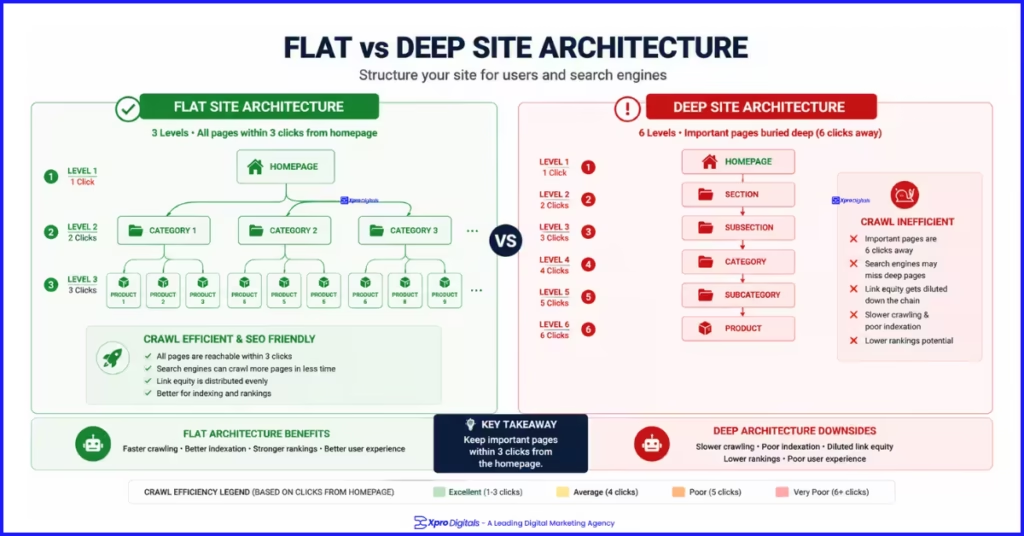
Pillar 2: On-Page SEO – Making Every Page Earn Its Ranking
On-page SEO covers everything within individual pages that tells Google what they are about and why they are the best result for specific queries. Technical SEO gets your pages into Google’s evaluation process. On-page SEO determines what they rank for and how high they go. A restaurant chain we worked with had twelve location pages, each targeting a different city. All twelve had identical content with only the city name swapped in. None ranked above position 40 for their target terms. After rewriting each location page with genuinely city-specific content including local landmarks, parking information, locally relevant dishes, and real customer quotes from that location, eleven of the twelve pages moved to page one within ten weeks. Same domain. Same technical setup. Pure on-page content differentiation.Title Tags and Meta Descriptions
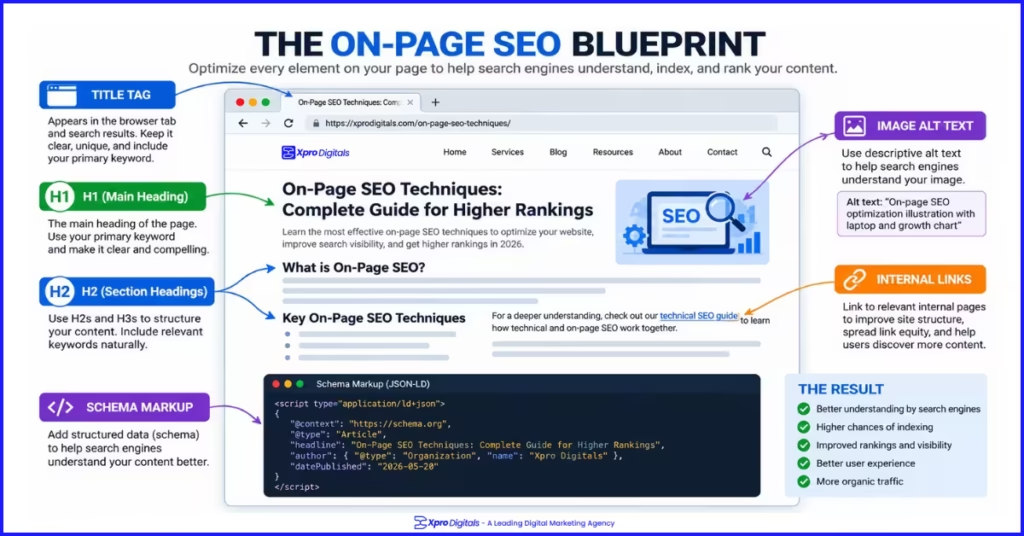
The title tag is the most influential single on-page signal. It tells Google what your page is about and appears as the clickable headline in search results. Every title tag should include the primary keyword in the first half, stay under 60 characters, and give searchers a specific reason to click your result over the others on the page. Meta descriptions do not directly affect rankings but significantly affect click-through rates. A well-written meta description acts as an ad for your page: one sentence summarising what the page delivers and one sentence giving a clear reason to click. Keep them under 155 characters and write a unique one for every page.Heading Structure and Content Depth
Every page needs exactly one H1 that includes the primary keyword and clearly states the page topic. H2 headings organise major sections and should include secondary and related keywords where they read naturally. H3 headings cover subsections within H2 sections. Never skip heading levels. The heading hierarchy is a content map that tells Google the relative importance of every topic on the page. Content depth in 2026 means covering a topic completely for your target reader, not hitting a word count. Before writing any page, search your target keyword and study the top five results. Note every subtopic, format element, and question they address that your page does not. Those gaps are your content priorities. Pages that cover every relevant angle consistently outrank those that partially address the topic.Search Intent Alignment
Search intent is the most important on-page factor and the one most often missed. Google categorises every query by its underlying intent: informational (wanting to learn), commercial (researching before buying), transactional (ready to buy), or navigational (looking for a specific brand). If your content format does not match the dominant intent for your keyword, it will underrank regardless of how well every other element is optimised.| Intent Type | What Searcher Wants | Right Content Format | Wrong Format |
| Informational | Learn or understand | Guide, tutorial, explainer | Product page or landing page |
| Commercial | Compare before buying | Comparison, best-of, review | Blog post without comparison |
| Transactional | Buy or convert now | Product page, service page | Informational blog post |
| Navigational | Find a specific brand | Homepage, brand landing page | Generic category content |
E-E-A-T: Experience, Expertise, Authoritativeness, Trustworthiness
Google’s Search Quality Evaluator Guidelines define high-quality content through the E-E-A-T framework. Experience means demonstrating first-hand knowledge: original data, real client case studies, personal practice observations. Expertise means covering your subject with accuracy and depth. Authoritativeness means being recognised by others in your field through citations and links. Trustworthiness means presenting accurate, transparent, and verifiable information. Building E-E-A-T into every page you publish is the most sustainable long-term SEO investment you can make. Our dedicated guide on E-E-A-T and why it matters for your rankings explains every signal with practical steps for implementing each one at both the page and site level.Schema Markup for Rich Results
Schema markup is structured data in your page code that gives Google machine-readable context about your content. It enables rich results: star ratings, FAQ expansions, product pricing, breadcrumb trails, and event details in search listings. Rich results increase click-through rates significantly by making your listing more visually prominent than plain blue link competitors. The most impactful schema types for most businesses are: Article or BlogPosting for content pages, Product and Offer for ecommerce pages, AggregateRating where customer reviews exist, FAQPage for question-and-answer sections, BreadcrumbList for navigational hierarchy, and LocalBusiness for location-based businesses. Our ecommerce schema markup implementation guide covers every schema type with working code examples and validation steps using Google’s Rich Results Test.On-Page SEO Checklist
| Element | Pass Criteria | Done? |
| Title tag | Keyword-led, under 60 chars, unique, specific | |
| Meta description | Under 155 chars, keyword included, ends with CTA | |
| H1 tag | One per page, primary keyword present | |
| H2 / H3 structure | Logical hierarchy, secondary keywords included | |
| Search intent match | Content format matches top-ranking results | |
| Content completeness | Covers all subtopics competitors address | |
| Keyword in first 100 words | Primary keyword in opening paragraph naturally | |
| Image alt text | Descriptive, keyword-relevant on key images | |
| Internal links out | 2-4 links to genuinely related pages | |
| Internal links in | At least 2-3 pages linking to this page | |
| Schema markup | Correct type applied, error-free in Rich Results Test | |
| E-E-A-T signals | Author bio, original data, citations present | |
| Core Web Vitals | LCP, INP, CLS pass on mobile | |
| URL structure | Short, keyword-relevant, hyphenated, lowercase |
Pillar 3: Off-Page SEO – Building Authority That Google Trusts
Off-page SEO refers to signals outside your own website that tell Google your content is credible and worth ranking. The most important off-page signal is backlinks: links from other websites pointing to yours. Google interprets these as votes of confidence. A link from a credible, topically relevant website signals that another trusted source considers your content worth referencing. Not all backlinks are equal. A single link from a respected industry publication is worth more for rankings than fifty links from irrelevant or low-quality directories. Google evaluates the quality, relevance, and diversity of your backlink profile when determining how much authority to assign your domain and individual pages.Link Building Strategies That Work in 2026
| Strategy | How It Earns Links | Difficulty | Quality Potential |
| Original research and data | Publish studies others cite as a reference | High | Very High |
| Comprehensive buying guides | Become the best resource on a topic | Medium | High |
| Digital PR and media outreach | Pitch newsworthy stories to journalists | High | Very High |
| Supplier and partner links | Request links from existing business relationships | Low | Medium-High |
| Expert roundups and contributions | Contribute insights to industry publications | Medium | Medium-High |
| Broken link building | Replace dead links on relevant external sites | Medium | Medium |
| Local directory and citation building | List in relevant local and industry directories | Low | Medium (local) |
What to Avoid in Link Building
Buying links from link networks or paid directories violates Google’s webmaster guidelines and risks a manual penalty that can remove pages or your entire site from search results. Link farms, excessive reciprocal link exchanges, and keyword-stuffed anchor text patterns across many links are all practices Google’s algorithms and manual review teams specifically identify and act against. The correct principle: earn links because your content genuinely deserves them. Create content that serves a specific audience so well that other websites naturally want to reference it. This approach builds sustainable authority that compounds over years rather than producing short-term gains followed by penalties.Pillar 4: Local SEO – Capturing Customers in Your Area
Local SEO is the discipline of optimising your online presence to appear in location-based search results. For any business that serves a geographic area, local SEO is often the highest-return SEO investment available. Shoppers and service seekers using location-qualified queries or near-me searches are closer to a purchase decision than those using generic national keywords.Google Business Profile: The Foundation of Local SEO
Your Google Business Profile is the single most influential asset in local SEO. It powers your appearance in Google Maps results and the local pack (the map with three business listings) that appears above organic results for location-based queries. An incomplete or inaccurate GBP profile is the most common reason local businesses do not appear in the Map Pack despite having a legitimate claim to that visibility. A plumbing business we worked with had a claimed GBP with no photos, no description, no service list, and no posts for five months. They had four reviews. Competitors in the local pack had between 60 and 140 reviews. After a full profile optimisation and an ethical review generation campaign, the business entered the Map Pack within six weeks. Our Google Business Profile optimisation guide covers every element of setting up and maintaining a high-performing profile.NAP Consistency and Local Citations
NAP stands for Name, Address, and Phone number. Consistency of these details across your website, GBP, and every local directory where your business is listed is a foundational local ranking signal. Even minor inconsistencies like abbreviated street names or different phone number formats across listings create conflicting signals that suppress local visibility. Audit your listings on Google, Bing Places, Apple Maps, Yelp, and relevant industry directories and correct every discrepancy.Local Reviews and Reputation
Customer reviews on your GBP profile are a significant local ranking factor and the most influential trust signal for nearby searchers. Businesses with more reviews and higher average ratings consistently outrank competitors with fewer or lower-rated reviews in local pack results. Build a consistent review generation process: follow up with every satisfied customer through email or SMS with a direct link to your GBP review page. Keep the request simple, specific, and easy to complete on mobile.Keyword Research: The Strategic Foundation of All SEO
Keyword research determines which search queries your pages compete for. Without it, you are creating content based on assumptions about what your audience searches for. With it, every page you publish targets a specific, researched query with a clear intent, appropriate competition level, and genuine business relevance.Step-by-Step Keyword Research Process
Step 1: Define Your Core Topic Areas
List the four to six core topics your business covers. For a digital marketing agency, these might be SEO, PPC, social media, web design, and content marketing. For an ecommerce outdoor retailer, these might be camping gear, hiking equipment, climbing accessories, and outdoor clothing. These become the seeds for all subsequent keyword research.Step 2: Expand Each Topic Into Keyword Clusters
For each core topic, use Google’s search autocomplete suggestions, People Also Ask boxes, Google Search Console’s Performance report, and keyword research tools like Ahrefs or Semrush to identify specific queries people search for within that topic. Group related queries into clusters. Each cluster maps to one page or one section of your site.Step 3: Assess Volume, Difficulty, and Intent
For each keyword cluster, note search volume, keyword difficulty, and the dominant search intent from reviewing the top results. Do not automatically target the highest-volume terms. A keyword with 400 monthly searches, low competition, and clear commercial intent will often deliver faster rankings and more qualified traffic than a keyword with 40,000 searches dominated by established national brands.Step 4: Map Keywords to Page Types
Assign each cluster to the most appropriate existing page or identify where a new page is needed. Transactional clusters go to product or service pages. Informational clusters go to blog posts and guides. Commercial investigation clusters go to comparison or review pages. Never put two clusters with different intents on the same page.Step 5: Identify Content Gaps
Compare your keyword map against your existing published pages. Queries your competitors rank for that you have no content for are your highest-priority new content opportunities. Our guide on ecommerce keyword research and finding high-intent product keywords covers this process in full specifically for product-focused websites.Content Strategy: Building Topical Authority Over Time
A content strategy is not a publishing schedule. It is a deliberate plan for creating content that builds topical authority in your field, serves your audience at every stage of the buying journey, and internally links to create clusters that signal depth of expertise to Google. The topic cluster model is the most effective content architecture for SEO in 2026. A pillar page covers a core topic broadly and comprehensively. Cluster pages cover specific subtopics in depth and link back to the pillar page. The internal linking between pillar and cluster pages distributes authority across the cluster and signals to Google that your domain covers this subject area comprehensively. This is how topical authority is built at the site level.Content Freshness Strategy
Published content is not finished content. Pages that ranked well six months ago may have lost ground because competitors improved their content, new search features changed what top results look like, or the information on the page has become outdated. A quarterly content review process, checking statistics, expanding thin sections, and updating outdated examples, keeps existing pages competitive and frequently delivers meaningful ranking improvements without creating new pages. We ran a content refresh programme for an IT services company across their top 15 ranking blog posts. For each, we updated outdated statistics, added a new section addressing questions that had appeared in the People Also Ask box for the target keyword since the original publish date, and improved the internal linking to their service pages. Average ranking improvement across the 15 posts was 4.2 positions within eight weeks.SEO and AI Search: What Changes in 2026
Google AI Overviews represent the most significant change to search result pages in years. These AI-generated summaries appear above organic listings for many queries and cite multiple sources within the summary. Being cited in an AI Overview delivers brand visibility and high-quality referral traffic from users who click through after seeing the overview. The pages most consistently cited in AI Overviews share two characteristics: strong technical foundations (fast, correctly indexed, with clean structured data) and comprehensive on-page content (well-structured, directly answering specific questions, with clear E-E-A-T signals). The best practices for traditional organic rankings are also the best practices for AI Overview citations. There is no separate AI search optimisation strategy. For ecommerce businesses, AI Overviews are creating new opportunities for product-level citations in shopping-related queries. Our guide on AI search and ecommerce optimisation for Google AI Overviews covers how to position your product and category pages to appear in AI-driven results.SEO vs PPC: How They Work Together
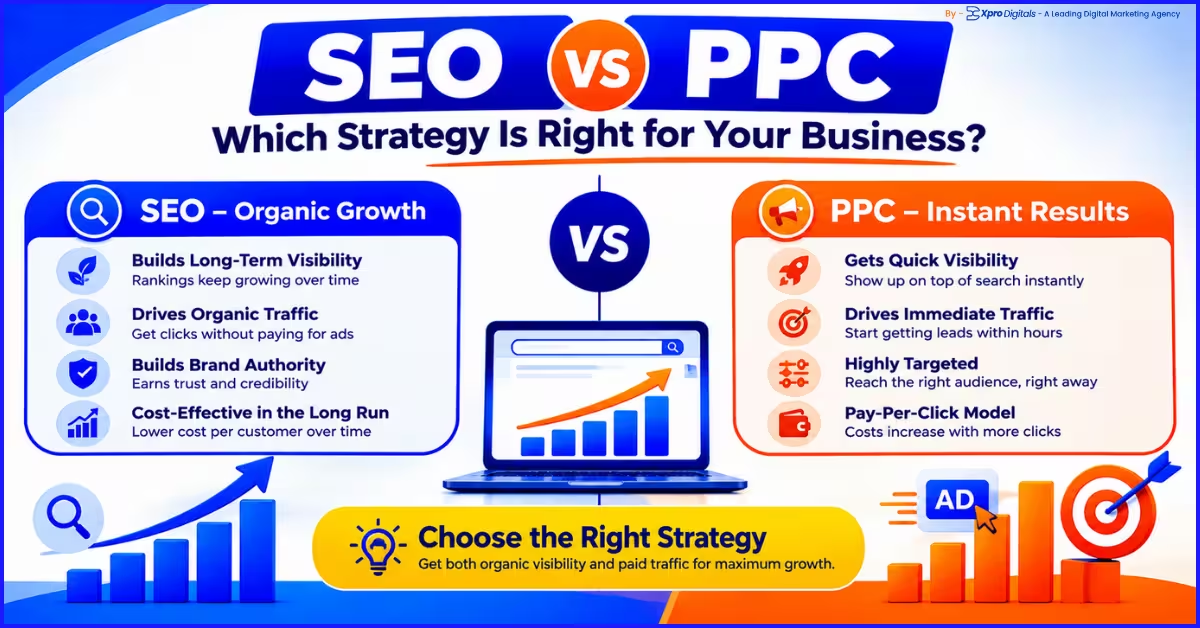
SEO and paid advertising serve different functions. Paid search advertising through Google Ads delivers immediate visibility for keywords you bid on. The moment you stop spending, the traffic stops. SEO builds organic visibility that compounds over time. Pages that earn page one rankings continue driving traffic months and years after the initial investment. The most effective approach for most businesses is running both simultaneously. Use PPC for immediate visibility on your most commercial keywords while SEO builds long-term organic authority. Use PPC data on which keywords convert best to prioritise your SEO content investment. Use SEO traffic data to identify which organic visitors are most valuable and target them more precisely with paid campaigns. For a detailed analysis of when to prioritise each channel and how to allocate budget between them, our guide on SEO vs PPC: which strategy is right for your business covers the decision framework with real examples by business type.Your 6-Month SEO Roadmap
Month 1: Technical Audit and Foundation Fixes
Run a full site crawl with Screaming Frog. Review Google Search Console Coverage, Core Web Vitals, and Performance reports. Identify and fix all critical indexation issues, crawl errors, and Core Web Vitals failures on your highest-traffic pages. Submit a clean XML sitemap. Verify HTTPS. Confirm canonical tags. This month establishes the foundation every subsequent effort builds on.Month 2: Keyword Research and Content Mapping
Complete keyword research across your core topic areas. Map keywords to existing pages and identify gaps needing new pages. Prioritise by search volume, intent match, and business relevance. Create a content calendar sequencing new content creation and existing page optimisation across the next four months.Month 3: On-Page Optimisation of Existing Pages
Apply on-page improvements to your 20 highest-traffic and highest-potential pages. Rewrite title tags, improve heading structure, expand thin content sections, add schema markup, build internal links. This month typically delivers the fastest visible ranking improvements because you are improving pages with existing ranking history.Month 4: Content Creation and Cluster Building
Begin publishing new content targeting keyword gaps identified in month two. Focus on your highest-priority topic clusters first. Ensure every new post links to relevant service or product pages and to the pillar page of its cluster. Link back from the pillar page and existing related posts to each new piece.Month 5: Link Building and Authority Development
Launch an outreach campaign to earn backlinks for your best-performing content. Identify your three strongest pieces of content and reach out to topically relevant publications and resource pages. Set up a review generation process for local businesses. Build citations on relevant local and industry directories.Month 6: Measurement, Refresh, and Scale
Review ranking movements and traffic data for every optimised page. Identify the highest-impact improvements and replicate them across additional pages. Run a content refresh on posts that improved rankings but not yet to page one. Set up ongoing monitoring processes. Plan the next six months based on what the data shows is working.Measuring SEO Performance: The Metrics That Matter
| Metric | What It Tells You | Tool | Review Frequency |
| Organic sessions by landing page | Which pages drive real traffic | Google Analytics | Weekly |
| Organic conversions by landing page | SEO’s actual business impact | Google Analytics | Weekly |
| Click-through rate by query | Title and meta performance | Search Console | Monthly |
| Average position by page | Ranking trends over time | Search Console | Monthly |
| Core Web Vitals by page type | Experience issues affecting rankings | Search Console / PageSpeed | Monthly |
| Index coverage errors | Technical issues blocking visibility | Search Console | Monthly |
| Referring domains growth | Authority building trajectory | Ahrefs or Semrush | Monthly |
| Local pack visibility | Map Pack appearance for local queries | GBP Insights | Monthly |